
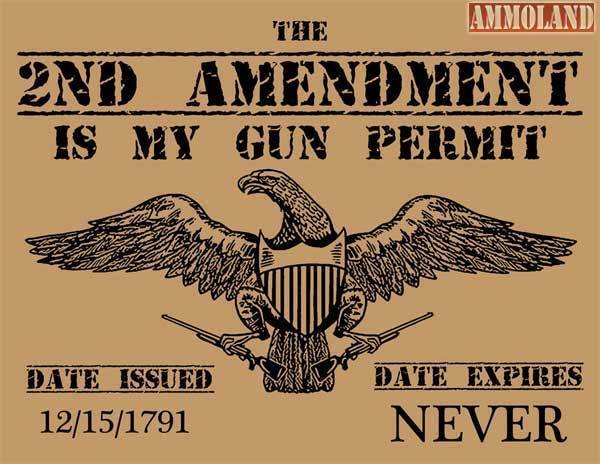
The Right to Bear Arms – The Second Amendment Does Not Grant the Right,
It Recognizes It
The right to keep and bear arms does not originate in the Constitution. It precedes it.
The Second Amendment does not create a right. It confirms a pre-existing one.
Self-preservation is not a policy preference. It is a natural right.
The Text of the Second Amendment
Amendment II:
A well regulated Militia, being necessary to the security of a free State, the right of the people to keep and bear Arms, shall not be infringed.
The operative clause is clear: “The right of the people… shall not be infringed.”
The phrase “the people” appears elsewhere in the Constitution — in the First and Fourth Amendments — and consistently refers to individual citizens, not government entities.
The Natural Right of Self-Preservation
The Founders understood self-defense as inherent.
A free citizen must not be dependent on the state for protection.
The right to defend:
- One’s life
- One’s family
- One’s property
- One’s community
It is not a privilege granted by the government. It is the foundation of liberty.
“A well regulated Militia” in 18th-century language meant:
Properly functioning.
Well-equipped.
Disciplined.
The militia was composed of the people — not a standing federal army.
An armed citizenry was considered a structural safeguard against tyranny.
Disarmament historically precedes authoritarian consolidation.
The Second Amendment contains no conditional language.
It does not state:
- “Subject to federal licensing”
- “Subject to registration”
- “Subject to bureaucratic approval”
It states plainly: Shall not be infringed.
Every regulatory layer must be evaluated against that standard.
Whether one agrees with modern policy debates or not, constitutional analysis must begin with the text.
Federal Gun Control and Constitutional Authority
Congress is granted enumerated powers in Article I, Section 8.
There is no explicit power to regulate personal firearm ownership among citizens.
Arguments for federal regulation typically rely on:
- The Commerce Clause
- Broad interpretations of federal authority
Whether those interpretations are faithful to the original constitutional structure is a legitimate constitutional question — and one that deserves serious examination.
Below is a presentation by Publius Huldah, a constitutional attorney and strict constructionist of the U.S. Constitution, addressing federal authority and the Second Amendment.
Publius Huldah has written and spoken extensively on:
- The Federalist Papers
- Nullification
- Constitutional conventions
- Structural limits on federal power
Her arguments center on strict textual interpretation and enumerated powers.
Publius Huldah has addressed State Legislatures on the subjects of Nullification, the 2nd Amendment, Constitutional Conventions, and other issues related to liberty and the U.S. Constitution.
The debate over firearms is often framed emotionally.
The Constitution frames it structurally.
The Second Amendment is not about sport.
It is not about a hobby.
It is not about politics.
It is about whether the individual retains the ultimate means of self-preservation in a free society.
Liberty without the capacity for defense is fragile. The Second Amendment exists because the Founders understood that reality.
 The Individualist