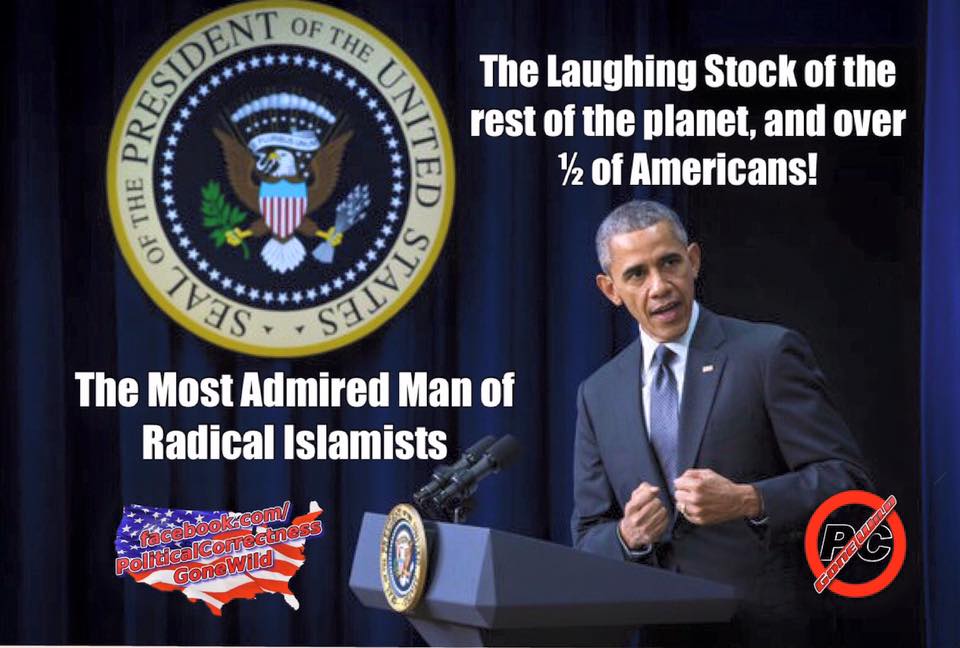
Obama takes chunks out of the Second Amendment….
Author Archives: myself313
Why the Congress does not Impeach Obama?
Watch see and read the photos, videos, opinions, suggestions and some wish lists….
Watch, read and make your own decision
The Islam Issue.
There is a shift from old partners and allies like Israel, to new one like Iran.
The Obama administration demonstrates strong favoritism to Islam and Muslims.
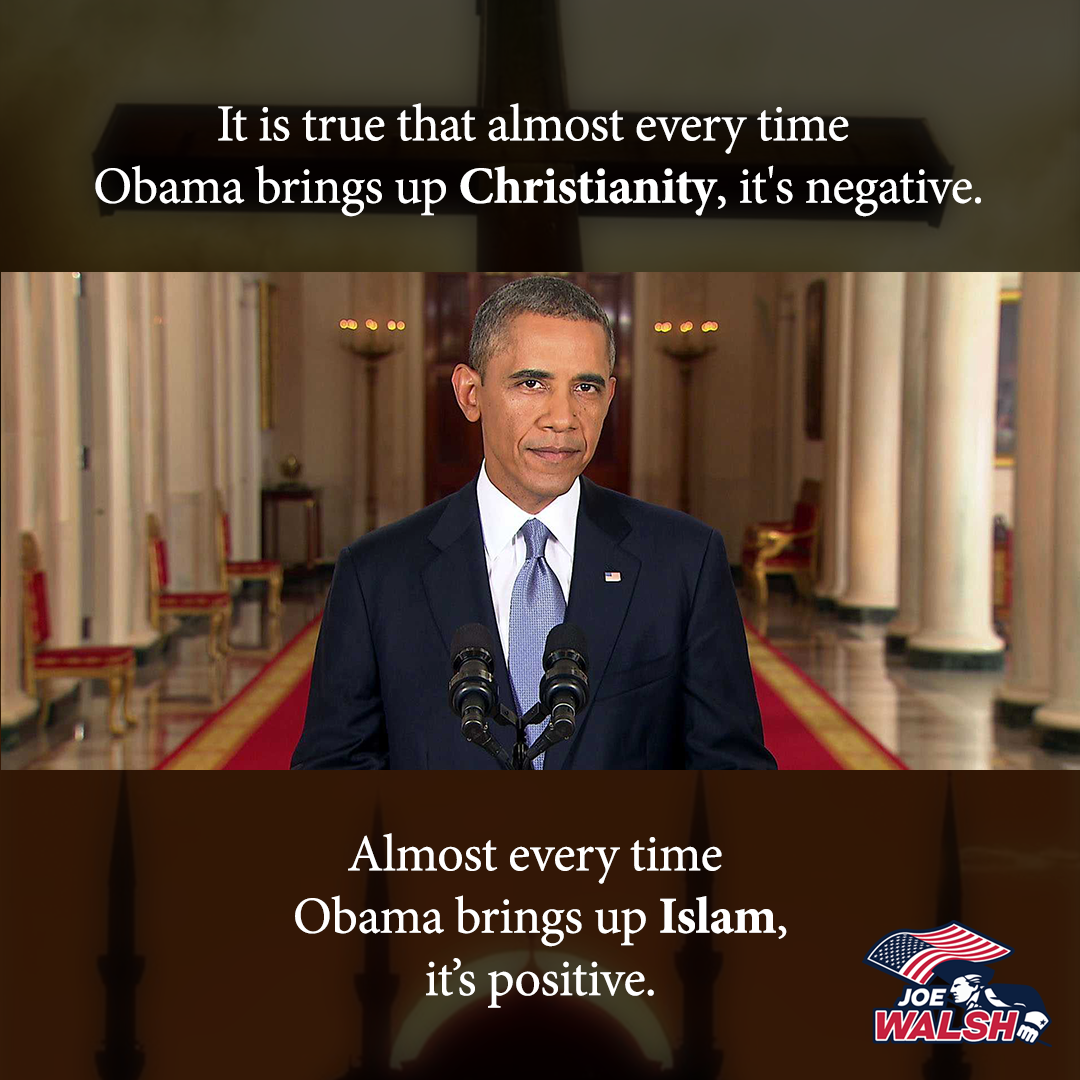
Barack Hussein Obama repeatedly declares his love of Islam and talk about Islam with passion which does not exist when he talks about his own self claimed religion, Christianity.
Barack Hussein Obama refuses to mention the words Islam or Muslims when talking about terror attacks committed by Muslims.
His “halfhearted” campaign against ISIS left the load to Vladimir Putin, who now leads the war against ISIS
His acceptance of the Muslim Brotherhood and other extremely dangerous Muslim Organizations is unacceptable to most Americans
His choice of Muslims advisors, and placing same in sensitive national security positions is dangerous to say the least
Lack of Pride in America
He shows no pride in our Nation History and consider America past to be imperialistic, and abusive to the rest of the world, something we Americans have to denounce and apology for.
He resents the Idea of Exceptional America and aim to transform our nation to comply with the European type socialistic countries.
Worst relationships with Police Departments and the USA Military.
He sided with “Black Life Matter” type of movements in conflicts with various Police Departments.
He has zero military experience, yet, he disregards advice given by top Military and Intelligent Personal.
He caused a massive resignation wave of experienced Military leaders that refuses to accept his way of handling military and security issues.
Abuse of power and disregard to the Constitution
He has no respect to The Constitution of the United State and wage a war on the Second Amendment trying to abolish it piece by piece.
So let ask again; Why the Congress does not Impeach Barack Hussein Obama?
And now for a “wish List”
Impeaching Barack Hussein Obama, President of the United States, for high crimes and misdemeanors.
Resolved, That Barack Hussein Obama, President of the United States, is impeached for high crimes and misdemeanors and that the following articles of impeachment be exhibited to the United States Senate:
Articles of impeachment exhibited by the House of Representatives of the United States of America in the name of itself and of the people of the United States of America, against Barack Hussein Obama, President of the United States of America, in maintenance and support of its impeachment against him for high crimes and misdemeanors.
Article I
In his conduct while President of the United States, Barack Hussein Obama, in violation of his constitutional oath to faithfully execute the office of President of the United States and, to the best of his ability, preserve, protect and defend the Constitution of the United States, and in violation of his constitutional duty to take care that the laws be faithfully executed, has willfully corrupted and manipulated the executive branch to increase its power and destroy the balance of powers between the three branches of government that is established by the Constitution of the United States.
The means used to implement this course of conduct or scheme included one or more of the following acts:
(1) Shortly after being sworn in for his first term as President of the United States, Barack Hussein Obama began creating new departments and appointing Czars to oversee these departments. These Czars were never submitted to the United States Senate for approval as required by Article 2, Section 2 of the Constitution. In addition, these Czars and the Departments have budgets that are not subject to being controlled by Congress as provided for by Article 1, Section 8 of the Constitution. He also made recess appointments when the Senate was not in recess and these appointments were struck down by the Supreme Court.
(2) Article 2, Section 3 of the Constitution mandates that the President of the United States “shall take Care that the Laws be faithfully executed…” Barack Hussein Obama, in violation of his oath of office has repeatedly ignored this Constitutional mandate by refusing to enforce laws against illegal immigration, defend in court the Defense of Marriage Act (DOMA), and refusing to enforce Federal voting laws.
(3) Article 1 of the Constitution establishes the legislative branch of the U.S. government and sets forth the powers of the Senate and House of Representatives to make laws. These powers are exclusive and the Constitution does not grant the President the power to either make laws or amend them on his own. Barack Hussein Obama has ignored these provisions and made or changed laws by either issuing unconstitutional executive orders or instructing governmental departments to take illegal and unconstitutional actions. Specific actions include, but are not necessarily limited to:
A. Ordering the Environmental Protection Agency to implement portions of the Cap & Trade bill that failed to pass in the U.S. Senate.
B. Ordering implementation of portions of the “Dream Act” that failed to pass in Congress.
C. Orchestrating a government takeover of a major part of the automobile industry in 2009.
D. Ordering a moratorium on new offshore oil and gas exploration and production without approval of Congress.
E. Signing an Executive Order on March 16, 2012 giving himself and the Executive branch extraordinary powers to control and allocate resources such as food, water, energy and health care resources etc. in the interest of vaguely defined national defense issues. It would amount to a complete government takeover of the U.S. economy.
F. Signing an Executive Order on July 6, 2012 giving himself and the Executive branch the power to control all methods of communications in the United States based on a Presidential declaration of a national emergency.
G. Signing an Executive Order on January 6, 2013 that contained 23 actions designed to limit the individual right to keep and bear arms guaranteed by the Second Amendment to the Constitution.
H. Amending portions of the Affordable Healthcare Act and other laws passed by Congress without Congressional approval as required by Article 1 of the Constitution.
I. Issuing Executive orders in January 2014 amending the HIPPA law to allow the turning over of confidential medical records to Federal agencies if there is any information to be used to add individuals to the NICS list to prohibit them from purchasing firearms.
J. Having the EPA impose regulations on the coal industry that will force many utility companies and coal mines out of business. This will cost the U.S. economy thousands of jobs and dramatically increase the cost of energy to the public. This is being done without Congressional approval.
K. Hindering the ability of the U.S. Border Patrol Agency to not only stop illegal immigration, but to stop human and drug trafficking.
L. Removing the work requirement from welfare reform legislation without Congressional approval.
Article II
(1) Article 2, Section 3 of the Constitution mandates that from time to time the President “shall give to Congress information on the State of the Union….” Implicit in this is an obligation for the President to be truthful with the Congress and the American people. Barack Hussein Obama has repeatedly violated his oath of office and the requirements of the Constitution by willfully withholding information on important issues or actively taken part in misleading the Congress and the American people. Specific actions include, but are not necessarily limited to:
A. Using Executive privilege to block Congress from getting documents relating to the DOJ’s Operation Fast and Furious and the death of U.S. Border Patrol Brian Terry.
B. Had members of his administration provide false information about the act of terrorism committed in Benghazi, Libya on September 11, 2012 and refusing to allow the State Department and other federal agencies to cooperate in the Congressional investigation.
C. Falsely labeled the mass murder of American soldiers at Ft. Hood, Texas as “workplace violence” instead of the act of Islamic terrorism it was.
D. Falsely labeling the IRS targeting of conservative and Christian groups as a “phony” scandal and refusing to order an active pursuit of the investigation into who was ultimately responsible.
E. Refusing to order an independent investigation of the actions of Eric Holder and the DOJ in targeting the phone records of members of the news media.
F. Telling the American people on a television show that the NSA was not prying into the emails and phone calls of Americans when the facts prove otherwise.
(2) The oath of office of the President of the United States requires him to preserve, protect and defend the Constitution. This obviously includes what may be the most important part of the Constitution, the Bill of Rights. Barack Hussein Obama has repeatedly violated his oath of office by seeking to limit both the individual rights and the rights of the States guaranteed in the first ten amendments to the Constitution. Specific actions include, but are not necessarily limited to:
A. Having the Department of Health and Human Services order religious institutions and businesses owned by religious families to provide their employees free contraception and other services that are contrary to their religious beliefs. This is being done under the auspices of the Affordable Health Care Act and violates the religious freedom clauses of the First Amendment.
B. Having the military place restrictions on the religious freedom of Chaplains and other members of the military in order to favor gay rights advocates and atheists in violation of the First Amendment.
C. Having the military place restrictions on the freedom of speech of members of the military and the civilian employees of the DOD in violation of their rights under the First Amendment.
D. Using Executive orders and government agency actions to limit Second Amendment rights. This includes actions by the Veterans Administration to disarm American veterans without due process as required by the Fifth Amendment.
E. Having the National Security Agency intercept and monitor the private communications of millions of Americans without a court order and in violation of the Fourth Amendment.
F. Joining with foreign governments in lawsuits against sovereign U.S. states to prohibit them from enforcing immigration laws. This is in violation of the Tenth Amendment.
G. Filing suits under the Voting Rights Act against sovereign U.S. states to prevent them from enforcing Voter ID laws despite rulings by the Supreme Court upholding these laws. This is another violation of the Tenth Amendment and the balance of powers.
H. Having the IRS propose new regulations on conservative 501 (C ) (4) organizations to limit their freedom of speech and political activities during election cycles in violation of the First Amendment to the Constitution.
I. Having the FCC prepare new rules on internet neutrality in violation of the ruling by the U.S. Supreme Court striking down such regulations.
J. Having the FCC institute a plan to place agents in newsrooms of radio and television stations as well as print media to monitor whether they are providing the “proper” news content to the public, a direct violation of the First Amendment to the Constitution.
K. Having the Secretary of State sign the U.N. Small Arms Treaty despite the opposition of a majority of the U.S. Senate and with full awareness that the implementation of the treaty would violate the Second Amendment rights of American citizens.
(3) Under Article 2, Section 2 of the Constitution the President of the United States is the Commander in Chief of the United States military and as such is responsible for using them in a manner that best serves the national security of the United States and protects our soldiers from unnecessary risks and harm. Barack Hussein Obama has violated his oath of office in this regard. Specific actions include, but are not necessarily limited to:
A. In the name of “political correctness,” he imposed unnecessary and dangerous rules of engagement on our troops in combat causing them to lose offensive and defensive capabilities and putting them in danger. Many American service personnel have been killed or wounded as a result of this policy.
B. Releasing the identity of American military personnel and units engaged in dangerous and secret operations such as the killing of Osama bin Laden by Navy Seal team 6.
C. Article 1, Section 8 of the Constitution gives Congress the exclusive power to declare war. Yet, without consulting Congress President Obama ordered the American military into action in Libya.
D. Having the Attorney General tell Secretaries of State that they do not have to comply with the Federal law requiring states to timely send absentee ballots to military personnel.
Article III
(1) Article 2, Section 2 of the Constitution establishes the President as Commander in Chief of the United States Military. This requires him to use his power and authority to oversee the proper use of the military to properly protect and defend the people and territory of the United States against all enemies, both foreign and domestic. He is further responsible for using the U.S. military in a manner that is effective and protects members of the military and takes proper care of veterans.
The President takes an oath of office that encompasses these duties. Barack Hussein Obama has consistently violated these duties and violated his oath. Specific actions include, but are not necessarily limited to:
A. Imposing Rules of Engagement on the active military in war zones that have unnecessarily endangered the lives of American soldiers.
B. Allowed the leaking of classified information about U.S. military operations to the media in order to enhance his political image. Such leaks place the lives of U.S. soldiers in danger.
C. Despite being informed in 2009 of problems in the Veterans Administration involving treatment of veterans, took no action improve the situation, but instead ordered the VA to spend a major part of its budget on green energy projects at VA facilities instead on veteran care.
D. Endangered the lives of members of the American military and American civilians by negotiating with terrorists to trade five high level Taliban leaders in exchange for an American soldier who deserted his post and his fellow soldiers. In addition, he did the foregoing action in violation of Federal law since he did not provide the legally required thirty day notice to members of Congress of his intent to release prisoners from Guantanamo Bay.
E. Continues to refuse to enforce immigration laws passed by Congress in violation of Article 2, Section 3 of the Constitution, and further has used illegal and unconstitutional Executive orders to grant amnesty or de-facto amnesty to illegal aliens currently in the United States.
F. Has deliberately destroyed the morale and effectiveness of Border Patrol agents by interfering with their attempts to fulfill their oath of office and enforce laws legally passed by the U.S. Congress.
G. By his deliberate actions encouraged parents of thousands of children in Central America to send their children, often unaccompanied by adults, across the U.S. border and then asking for billions of taxpayer dollars to care for these children.
H. Ordered the Border Patrol and Department of Homeland Security to place thousands of these children on buses or planes and dumping them in communities around the country; often without any prior notifications to the local elected officials in these communities.
I. Allowed the TSA to let these children, as well as possible teenage gang members and unidentified to fly in U.S. Airlines at taxpayer expense without proper identification required by Federal law.
J. Has refused to respond to lawful requests by Governors of the southern Border States to close the Southern border to any further illegal immigration and has created a severe financial crisis for Border States and other states in order to advance his own political agenda.
K. Has ordered the release of thousands of illegal aliens who have been convicted of serious crimes in the U.S. to be released and stay in the country after they have served their sentences. This violates the requirements of Federal law that such people be immediately deported.
L. Ordered the immediate release of approximately 68,000 other criminals in Federal prisons that have been convicted of drug offenses. These actions endanger the lives and property of honest and law abiding American citizens that the President is legally and constitutionally required to protect.
M. Has authorized the IRS, HHS, BATF, DHS, and EPA to propose new regulations not authorized by Congress that will adversely affect the rights of Americans protected by the First, Second, Fourth, and Fifth Amendments to the Constitution.
In all of this, Barack Hussein Obama has undermined the integrity of his office, has brought disrepute on the Presidency, has betrayed his trust as President and has acted in a manner subversive of the rule of law and justice, to the manifest injury of the people of the United States.
Wherefore, Barack Hussein Obama, by such conduct, warrants impeachment and trial, and removal from office and disqualification to hold and enjoy any office of honor, trust or profit under the United States.
The Second Amendment
A well regulated Militia, being necessary to the security of a free state, the right of the people to keep and bear Arms, shall not be infringed.
This is the Second Amendment.
This is the complete second Amendment.
Can someone explain to me what right the Federal Government, State, Business or anyone else have to infringe on the Second Amendment by:
Imposing restrictions on the way one is allowed to carry Arms – demanding concealing handguns.
Any restrictions on what type of Arms one can bear.
Any restrictions on magazine capacity.
Any restrictions where one can’t bear Arms.
The second Amendment is here to Protect the governed (the Individuals) FROM the governs (the government politicians)
As written in the Federalist
“… you must first enable the government to control the governed; and in the next place oblige it to control itself,”
As said by Daniel Webster:
“…I am committed against every thing which, in my judgment, may weaken, endanger, or destroy [the Constitution]…, and especially against all extension of Executive power; and I am committed against any attempt to rule the free people of this country by the power and the patronage of the Government itself”
“It is hardly too strong to say that the Constitution was made to guard the people against the dangers of good intentions… There are men, in all ages… who mean to govern well; but they mean to govern. They promise to be kind masters; but they mean to be masters… They think there need to be but little restraint upon themselves… The love of power may sink too deep in their own hearts…”
The governs (the government politicians) fears, as they should, the Second Amendment and will try to destroy it piece by piece
It is up to the governed (the Individuals) to fight the governs (the government politicians) and protect the Second Amendment
Unless the governed (the Individuals) are willing and ready to do battle, if necessary, with the governs (the government politicians) they are doomed to tyranny and the loss of ALL of their rights
Who is Ayn Rand
About Individualism

From Wikipedia, the free encyclopedia · Edit on Wikipedia
Individualism is the moral stance, political philosophy, ideology, or social outlook that emphasizes the moral worth of the individual. Individualists promote the exercise of one’s goals and desires and so value independence and self-reliance and advocate that interests of the individual should achieve precedence over the state or a social group, while opposing external interference upon one’s own interests by society or institutions such as the government. Individualism is often contrasted with totalitarianism or collectivism.
Individualism makes the individual its focus and so starts “with the fundamental premise that the human individual is of primary importance in the struggle for liberation. “Liberalism, existentialism, and anarchism are examples of movements that take the human individual as a central unit of analysis. Individualism thus involves “the right of the individual to freedom and self-realization”.
It has also been used as a term denoting “The quality of being an individual; individuality” related to possessing “An individual characteristic; a quirk.” Individualism is thus also associated with artistic and bohemian interests and lifestyles where there is a tendency towards self-creation and experimentation as opposed to tradition or popular mass opinions and behaviors as so also with humanist philosophical positions and ethics.
Etymology [edit]
In the English language, the word “individualism” was first introduced, as a pejorative, by the Owenites in the late 1830s, although it is unclear if they were influenced by Saint-Simonianism or came up with it independently. A more positive use of the term in Britain came to be used with the writings of James Elishama Smith, who was a millenarian and a Christian Israelite. Although an early Owenite socialist, he eventually rejected its collective idea of property, and found in individualism a “universalism” that allowed for the development of the “original genius.” Without individualism, Smith argued, individuals cannot amass property to increase one’s happiness. William Maccall, another Unitarian preacher, and probably an acquaintance of Smith, came somewhat later, although influenced by John Stuart Mill, Thomas Carlyle, and German Romanticism, to the same positive conclusions, in his 1847 work “Elements of Individualism”.
The individual [edit]
Main article: Individual
An individual is a person or any specific object in a collection. In the 15th century and earlier, and also today within the fields of statistics and metaphysics, individual means “indivisible”, typically describing any numerically singular thing, but sometimes meaning “a person.” (q.v. “The problem of proper names”). From the 17th century on, individual indicates separateness, as in individualism. Individuality is the state or quality of being an individual; a person separate from other persons and possessing his or her own needs, goals, and desires.
Individualism and society [edit]
Individualism holds that a person taking part in society attempts to further his or her own interests, or at least demands the right to serve his or her own interests, without taking the interests of society into consideration (an individualist need not be an egoist). The individualist does not favor any philosophy that requires the sacrifice of the self-interest of the individual for higher social causes. Jean-Jacques Rousseau, however, claims that his concept of “general will” in the “social contract” is not the simple collection of individual wills and that it furthers the interests of the individual (the constraint of law itself would be beneficial for the individual, as the lack of respect for the law necessarily entails, in Rousseau’s eyes, a form of ignorance and submission to one’s passions instead of the preferred autonomy of reason).
Societies and groups can differ in the extent to which they are based upon predominantly “self-regarding” (individualistic, and arguably self-interested) rather than “other-regarding” (group-oriented, and group, or society-minded) behavior. Ruth Benedict made a distinction, relevant in this context, between “guilt” societies (e.g., medieval Europe) with an “internal reference standard”, and “shame” societies (e.g., Japan, “bringing shame upon one’s ancestors”) with an “external reference standard”, where people look to their peers for feedback on whether an action is “acceptable” or not (also known as “group-think”).
Individualism is often contrasted either with totalitarianism or with collectivism, but in fact there is a spectrum of behaviors at the societal level ranging from highly individualistic societies through mixed societies to collectivist.
Individuation theories [edit]
Main article: Individuation
The principle of individuation, or principium individuationis, describes the manner in which a thing is identified as distinguished from other things. For Carl Jung, individuation is a process of transformation, whereby the personal and collective unconscious is brought into consciousness (by means of dreams, active imagination or free association to take some examples) to be assimilated into the whole personality. It is a completely natural process necessary for the integration of the psyche to take place. Jung considered individuation to be the central process of human development. In L’individuation psychique et collective, Gilbert Simondon developed a theory of individual and collective individuation in which the individual subject is considered as an effect of individuation rather than a cause. Thus, the individual atom is replaced by a never-ending ontological process of individuation. Individuation is an always incomplete process, always leaving a “pre-individual” left-over, itself making possible future individuations. The philosophy of Bernard Stiegler draws upon and modifies the work of Gilbert Simondon on individuation and also upon similar ideas in Friedrich Nietzsche and Sigmund Freud. For Stiegler “the I, as a psychic individual, can only be thought in relationship to we, which is a collective individual. The I is constituted in adopting a collective tradition, which it inherits and in which a plurality of I ‘s acknowledge each other’s existence.”
Emotional self-interest [edit]
Emotional self-interest is defined by Nayef Al-Rodhan as “self-interest driven by neurochemically-mediated emotions”. As he suggests in his general theory of human nature, “emotional amoral egoism”, human behavior is primarily governed by self-interest. Humans first seek to ensure survival, and then they seek to dominate. These facets of human nature are a product of genetically coded survival instincts modified by the totality of our environment and expressed as neurochemically-mediated emotions and actions. Accordingly, once humans’ basic needs have been filled, they may employ measured self-interest. In some instances this may result in positive consequences like greatercooperation between individuals and societies. However, Al-Rodhan cautions that excessive general self-interest risks leading to deception, criminality, and conflict.
Based on his understanding of human nature, Al-Rodhan suggests introducing mechanisms that will check unregulated general self-interest. Good governance should include adequate checks on government powers and effective law enforcement, as well as the defense of human rights and their extension to include basic physiological and emotional needs.
Methodological individualism [edit]
Methodological individualism is the view that social phenomena can only be understood by examining how they result from the motivations and actions of individual agents. In economics, people’s behavior is explained in terms of rational choices, as constrained by prices and incomes. The economist accepts individuals’ preferences as givens. Becker and Stigler provide a forceful statement of this view:
On the traditional view, an explanation of economic phenomena that reaches a difference in tastes between people or times is the terminus of the argument: the problem is abandoned at this point to whoever studies and explains tastes (psychologists? anthropologists? phrenologists? sociobiologists?). On our preferred interpretation, one never reaches this impasse: the economist continues to search for differences in prices or incomes to explain any differences or changes in behavior.
Political individualism [edit]
With the abolition of private property, then, we shall have true, beautiful, healthy Individualism. Nobody will waste his life in accumulating things, and the symbols for things. One will live. To live is the rarest thing in the world. Most people exist, that is all.
Oscar Wilde, The Soul of Man under Socialism, 1891
Individualists are chiefly concerned with protecting individual autonomy against obligations imposed by social institutions (such as the state or religious morality). For L. Susan Brown “Liberalism and anarchism are two political philosophies that are fundamentally concerned with individual freedom yet differ from one another in very distinct ways. Anarchism shares with liberalism a radical commitment to individual freedom while rejecting liberalism’s competitive property relations.”
Civil libertarianism is a strain of political thought that supports civil liberties, or which emphasizes the supremacy of individual rights and personal freedoms over and against any kind of authority (such as a state state, a corporation, social norms imposed through peer pressure, etc.). Civil libertarianism is not a complete ideology; rather, it is a collection of views on the specific issues of civil liberties and civil rights. Because of this, a civil libertarian outlook is compatible with many other political philosophies, and civil libertarianism is found on both the right and left in modern politics. For scholar Ellen Meiksins Wood “there are doctrines of individualism that are opposed to Lockean individualism(…)and non-lockean individualism may encompass socialism”.
Liberalism [edit]
Main article: Liberalism
Liberalism (from the Latin liberalis, “of freedom; worthy of a free man, gentlemanlike, courteous, generous”) is the belief in the importance of individual freedom. This belief is widely accepted in the United States, Europe, Australia and other Western nations, and was recognized as an important value by many Western philosophers throughout history, in particular since the Enlightenment. It is often rejected by collectivist, Islamic, or confucian societies in Asia or the Middle East (though Taoists were and are known to be individualists). The Roman Emperor Marcus Aurelius wrote praising “the idea of a polity administered with regard to equal rights and equal freedom of speech, and the idea of a kingly government which respects most of all the freedom of the governed”.
Modern liberalism has its roots in the Age of Enlightenment and rejects many foundational assumptions that dominated most earlier theories of government, such as the Divine Right of Kings, hereditary status, and established religion. John Locke is often credited with the philosophical foundations of classical liberalism. He wrote “no one ought to harm another in his life, health, liberty, or possessions.”
In the 17th century, liberal ideas began to influence governments in Europe, in nations such as The Netherlands, Switzerland, England and Poland, but they were strongly opposed, often by armed might, by those who favored absolute monarchy and established religion. In the 18th century, in America, the first modern liberal state was founded, without a monarch or a hereditary aristocracy. The American Declaration of Independence includes the words (which echo Locke) “all men are created equal; that they are endowed by their Creator with certain unalienable rights; that among these are life, liberty, and the pursuit of happiness; that to insure these rights, governments are instituted among men, deriving their just powers from the consent of the governed.”
Liberalism comes in many forms. According to John N. Gray, the essence of liberalism is toleration of different beliefs and of different ideas as to what constitutes a good life.
Anarchism [edit]
Main article: Anarchism
Anarchism is a set of political philosophies that hold the state to be undesirable, unnecessary, or harmful, and often advocate stateless societies. While anti-statism is central, some argue that anarchism entails opposing authority or hierarchical organisation in the conduct of human relations, including, but not limited to, the state system.
For influential Italian anarchist Errico Malatesta “All anarchists, whatever tendency they belong to, are individualists in some way or other. But the opposite is not true; not by any means. The individualists are thus divided into two distinct categories: one which claims the right to full development for all human individuality, their own and that of others; the other which only thinks about its own individuality and has absolutely no hesitation in sacrificing the individuality of others. The Tsar of all the Russias belongs to the latter category of individualists. We belong to the former.”
Individualist anarchism [edit]
Main article: Individualist anarchism
Individualist anarchism refers to several traditions of thought within the anarchist movement that emphasize the individual and their will over any kinds of external determinants such as groups, society, traditions, and ideological systems. Individualist anarchism is not a single philosophy but refers to a group of individualistic philosophies that sometimes are in conflict.
In 1793, William Godwin, who has often been cited as the first anarchist, wrote Political Justice, which some consider to be the first expression of anarchism. Godwin, a philosophical anarchist, from arationalist and utilitarian basis opposed revolutionary action and saw a minimal state as a present “necessary evil” that would become increasingly irrelevant and powerless by the gradual spread of knowledge. Godwin advocated individualism, proposing that all cooperation in labour be eliminated on the premise that this would be most conducive with the general good.
An influential form of individualist anarchism, called “egoism,” or egoist anarchism, was expounded by one of the earliest and best-known proponents of individualist anarchism, the German Max Stirner. Stirner’s The Ego and Its Own, published in 1844, is a founding text of the philosophy. According to Stirner, the only limitation on the rights of the individual is their power to obtain what they desire, without regard for God, state, or morality. To Stirner, rights were spooks in the mind, and he held that society does not exist but “the individuals are its reality”. Stirner advocated self-assertion and foresaw unions of egoists, non-systematic associations continually renewed by all parties’ support through an act of will, which Stirner proposed as a form of organization in place of the state. Egoist anarchists claim that egoism will foster genuine and spontaneous union between individuals. “Egoism” has inspired many interpretations of Stirner’s philosophy. It was re-discovered and promoted by German philosophical anarchist and LGBT activist John Henry Mackay.
Josiah Warren is widely regarded as the first American anarchist, and the four-page weekly paper he edited during 1833, The Peaceful Revolutionist, was the first anarchist periodical published. For American anarchist historian Eunice Minette Schuster “It is apparent… that Proudhonian Anarchism was to be found in the United States at least as early as 1848 and that it was not conscious of its affinity to the Individualist Anarchism of Josiah Warren and Stephen Pearl Andrews…William B. Greene presented this Proudhonian Mutualism in its purest and most systematic form.”. Henry David Thoreau (1817–1862) was an important early influence in individualist anarchist thought in the United States and Europe. Thoreau was an American author, poet, naturalist, tax resister, development critic, surveyor, historian, philosopher, and leading transcendentalist. He is best known for his books Walden, a reflection upon simple living in natural surroundings, and his essay, Civil Disobedience, an argument for individual resistance to civil government in moral opposition to an unjust state. Later Benjamin Tucker fused Stirner’s egoism with the economics of Warren and Proudhon in his eclectic influential publication Liberty.
From these early influences individualist anarchism in different countries attracted a small but diverse following of bohemian artists and intellectuals, free love and birth control advocates (see Anarchism and issues related to love and sex), individualist naturists nudists (see anarcho-naturism), freethoughtand anti-clerical activists as well as young anarchist outlaws in what came to be known as illegalism and individual reclamation (see European individualist anarchism and individualist anarchism in France). These authors and activists included Oscar Wilde, Emile Armand, Han Ryner, Henri Zisly, Renzo Novatore, Miguel Gimenez Igualada, Adolf Brand and Lev Chernyi among others. In his important essay The Soul of Man under Socialism from 1891 Oscar Wilde defended socialism as the way to guarantee individualism and so he saw that “With the abolition of private property, then, we shall have true, beautiful, healthy Individualism. Nobody will waste his life in accumulating things, and the symbols for things. One will live. To live is the rarest thing in the world. Most people exist, that is all.” For anarchist historian George Woodcock “Wilde’s aim in The Soul of Man under Socialism is to seek the society most favorable to the artist … for Wilde art is the supreme end, containing within itself enlightenment and regeneration, to which all else in society must be subordinated … Wilde represents the anarchist as aesthete.” Woodcock finds that “The most ambitious contribution to literary anarchism during the 1890s was undoubtedly Oscar Wilde The Soul of Man under Socialism” and finds that it is influenced mainly by the thought of William Godwin.
Philosophical individualism [edit]
Ethical egoism [edit]
Main article: Ethical egoism
Ethical egoism (also called simply egoism) is the normative ethical position that moral agents ought to do what is in their own self-interest. It differs from psychological egoism, which claims that people do only act in their self-interest. Ethical egoism also differs from rational egoism, which holds merely that it is rational to act in one’s self-interest. However, these doctrines may occasionally be combined with ethical egoism.
Ethical egoism contrasts with ethical altruism, which holds that moral agents have an obligation to help and serve others. Egoism and altruism both contrast with ethical utilitarianism, which holds that a moral agent should treat one’s self (also known as the subject) with no higher regard than one has for others (as egoism does, by elevating self-interests and “the self” to a status not granted to others), but that one also should not (as altruism does) sacrifice one’s own interests to help others’ interests, so long as one’s own interests (i.e. one’s own desires or well-being) are substantially-equivalent to the others’ interests and well-being. Egoism, utilitarianism, and altruism are all forms of consequentialism, but egoism and altruism contrast with utilitarianism, in that egoism and altruism are both agent-focused forms of consequentialism (i.e. subject-focused or subjective), but utilitarianism is called agent-neutral (i.e. objective and impartial) as it does not treat the subject’s (i.e. the self’s, i.e. the moral “agent’s”) own interests as being more or less important than if the same interests, desires, or well-being were anyone else’s.
Ethical egoism does not, however, require moral agents to harm the interests and well-being of others when making moral deliberation; e.g. what is in an agent’s self-interest may be incidentally detrimental, beneficial, or neutral in its effect on others. Individualism allows for others’ interest and well-being to be disregarded or not, as long as what is chosen is efficacious in satisfying the self-interest of the agent. Nor does ethical egoism necessarily entail that, in pursuing self-interest, one ought always to do what one wants to do; e.g. in the long term, the fulfilment of short-term desires may prove detrimental to the self. Fleeting pleasance, then, takes a back seat to protracted eudaemonia. In the words of James Rachels, “Ethical egoism […] endorses selfishness, but it doesn’t endorse foolishness.”
Ethical egoism is sometimes the philosophical basis for support of libertarianism or individualist anarchism as in Max Stirner, although these can also be based on altruistic motivations. These are political positions based partly on a belief that individuals should not coercively prevent others from exercising freedom of action.
Egoist anarchism [edit]
Main article: Egoist anarchism
Egoist anarchism is a school of anarchist thought that originated in the philosophy of Max Stirner, a nineteenth-century Hegelian philosopher whose “name appears with familiar regularity in historically orientated surveys of anarchist thought as one of the earliest and best-known exponents of individualist anarchism.” According to Stirner, the only limitation on the rights of the individual is their power to obtain what they desire, without regard for God, state, or morality. Stirner advocated self-assertion and foresaw unions of egoists, non-systematic associations continually renewed by all parties’ support through an act of will, which Stirner proposed as a form of organisation in place of the state. Egoist anarchists argue that egoism will foster genuine and spontaneous union between individuals. “Egoism” has inspired many interpretations of Stirner’s philosophy but within anarchism it has also gone beyond Stirner. It was re-discovered and promoted by German philosophical anarchist andLGBT activist John Henry Mackay. John Beverley Robinson wrote an essay called “Egoism” in which he states that “Modern egoism, as propounded by Stirner and Nietzsche, and expounded byIbsen, Shaw and others, is all these; but it is more. It is the realization by the individual that they are an individual; that, as far as they are concerned, they are the only individual. “Nietzsche (see Anarchism and Friedrich Nietzsche) and Stirner were frequently compared by French “literary anarchists” and anarchist interpretations of Nietzschean ideas appear to have also been influential in the United States. Anarchists who adhered to egoism include Benjamin Tucker, Émile Armand, John Beverley Robinson, Adolf Brand, Steven T. Byington, Renzo Novatore,James L. Walker, Enrico Arrigoni, Biofilo Panclasta, Jun Tsuji, André Arru and contemporary ones such as Hakim Bey, Bob Black and Wolfi Landstreicher.
Existentialism [edit]
Main article: Existentialism
Existentialism is a term applied to the work of a number of 19th- and 20th-century philosophers who, despite profound doctrinal differences, generally held that the focus of philosophical thought should be to deal with the conditions of existence of the individual person and his or her emotions, actions, responsibilities, and thoughts. The early 19th century philosopher Søren Kierkegaard, posthumously regarded as the father of existentialism, maintained that the individual solely has the responsibilities of giving one’s own life meaning and living that life passionately and sincerely, in spite of many existential obstacles and distractions including despair, angst, absurdity, alienation, and boredom.
Subsequent existential philosophers retain the emphasis on the individual, but differ, in varying degrees, on how one achieves and what constitutes a fulfilling life, what obstacles must be overcome, and what external and internal factors are involved, including the potential consequences of the existence or non-existence of God. Many existentialists have also regarded traditional systematic or academic philosophy, in both style and content, as too abstract and remote from concrete human experience. Existentialism became fashionable in the post-World War years as a way to reassert the importance of human individuality and freedom.
Freethought [edit]
Main article: Freethought
Freethought holds that individuals should not accept ideas proposed as truth without recourse to knowledge and reason. Thus, freethinkers strive to build their opinions on the basis of facts, scientific inquiry, and logical principles, independent of any logical fallacies or intellectually limiting effects of authority, confirmation bias, cognitive bias, conventional wisdom, popular culture, prejudice, sectarianism, tradition, urban legend, and all other dogmas. Regarding religion, freethinkers hold that there is insufficient evidence to scientifically validate the existence of supernatural phenomena.
Humanism [edit]
Main article: Humanism
Humanism is a perspective common to a wide range of ethical stances that attaches importance to human dignity, concerns, and capabilities, particularly rationality. Although the word has many senses, its meaning comes into focus when contrasted to the supernatural or to appeals to authority. Since the 19th century, humanism has been associated with an anti-clericalism inherited from the 18th-century Enlightenment philosophes. 21st century Humanism tends to strongly endorse human rights, including reproductive rights, gender equality, social justice, and the separation of church and state. The term covers organized non-theistic religions, secular humanism, and a humanistic life stance.
Hedonism [edit]
Main article: Hedonism
Philosophical hedonism is a meta-ethical theory of value which argues that pleasure is the only intrinsic good and pain is the only intrinsic bad. The basic idea behind hedonistic thought is that pleasure (an umbrella term for all inherently likable emotions) is the only thing that is good in and of itself or by its very nature. The normative implications of this are evaluating character or behavior as morally good to the extent that one is concerned with pleasure/pain qua pleasure/pain or an action leads to a greater balance of pleasure over pain than any other would.
Libertinism [edit]
Main article: Libertine
A libertine is one devoid of most moral restraints, which are seen as unnecessary or undesirable, especially one who ignores or even spurns accepted morals and forms of behaviour sanctified by the larger society. Libertines place value on physical pleasures, meaning those experienced through the senses. As a philosophy, libertinism gained new-found adherents in the 17th, 18th, and 19th centuries, particularly in France and Great Britain. Notable among these were John Wilmot, 2nd Earl of Rochester, and the Marquis de Sade. During the Baroque era in France, there existed a freethinking circle of philosophers and intellectuals who were collectively known as libertinage érudit and which included Gabriel Naudé, Élie Diodati and François de La Mothe Le Vayer. The critic Vivian de Sola Pintolinked John Wilmot, 2nd Earl of Rochester’s libertinism to Hobbesian materialism.
Objectivism [edit]
Main article: Objectivism (Ayn Rand)
Objectivism is a system of philosophy created by philosopher and novelist Ayn Rand (1905–1982) that holds: reality exists independent of consciousness; human beings gain knowledge rationally from perception through the process of concept formation and inductive and deductive logic; the moral purpose of one’s life is the pursuit of one’s own happiness or rational self-interest. Rand thinks the only social system consistent with this morality is full respect for individual rights, embodied in pure laissez faire capitalism; and the role of art in human life is to transform man’s widest metaphysical ideas, by selective reproduction of reality, into a physical form—a work of art—that he can comprehend and to which he can respond emotionally. Objectivism celebrates man as his own hero, “with his own happiness as the moral purpose of his life, with productive achievement as his noblest activity, and reason as his only absolute.”
Objectivism by Ayn Rand
In 1962, in answer to the question “Will you tell us briefly, what is Objectivism?” Ayn Rand recorded an 8-minute introduction to her philosophy. In this video, Ayn Rand explains her position on the nature of reality, the efficacy of human reason, the nature of man and the ideal political system for man.
Some thoughts
Read Each One Carefully and think About It a Second or Two
1. I love you not because of who you are, but because of who I am when I am with you.
2. No man or woman is worth your tears, and the one who is, won’t make you
3. Just because someone doesn’t love you the way you want them to, doesn’t mean they don’t love you with all they have.
4. A true friend is someone who reaches for your hand and touches your heart.
5. The worst way to miss someone is to be sitting right beside them knowing you can’t have them.
6. Never frown, even when you are sad, because you never know who is falling in love with your smile.
7. To the world you may be one person, but to one person you may be the world.
8. Don’t waste your time on a man/woman, who isn’t willing to waste their time on you.
9. Maybe God wants us to meet a few wrong people before meeting the right one, so that when we finally meet the person, we will know how to be grateful.
10. Don’t cry because it is over, smile because it happened.
11. There’s always going to be people that hurt you so what you have to do is keep on trusting and just be more careful about who you trust next time around.
12. Make yourself a better person and know who you are before you try and know someone else and expect them to know you.
13. Don’t try so hard, the best things come when you least expect them to.
Feel-good, politically correct teachings
Bill Gates gave a speech at a High School about 11 things they did not and will not learn in school.
He talks about how feel-good, politically correct teachings created a generation of kids with no concept of reality and how this concept set them up for failure in the real world.
Rule 1 : Life is not fair – get used to it!
Rule 2 : The world won’t care about your self-esteem. The world will expect you to accomplish something BEFORE you feel good about yourself.
Rule 3: You will NOT make $60,000 a year right out of high school. You won’t be a vice-president with a car phone until you earn both.
Rule 4 : If you think your teacher is tough, wait till you get a boss.
Rule 5 : Flipping burgers is not beneath your dignity. Your
Grandparents had a different word for burger flipping: they called it opportunity.
Rule 6 : If you mess up, it’s not your parents’ fault, so don’t whine about your mistakes, learn from them.
Rule 7 : Before you were born, your parents weren’t as boring as they are now. They got that way from paying your bills, cleaning your clothes and listening to you talk about how cool you thought you were. So before you save the rain forest from the parasites of your parent’s generation, try delousing the closet in your own room.
Rule 8 : Your school may have done away with winners and losers, but life HAS NOT. In some schools, they have abolished failing grades and they’ll give you as MANY TIMES as you want to get the right answer. This doesn’t bear the slightest resemblance to ANYTHING in real life.
Rule 9 : Life is not divided into semesters. You don’t get summers off and very few employers are interested in helping you FIND YOURSELF. Do that on your own time.
Rule:10 : Television is NOT real life. In real life people actually have to leave the coffee shop and go to jobs.
Rule 11 : Be nice to nerds. Chances are you’ll end up working for one.
If you agree, pass it on.
If you can read this – Thank a teacher!
If you are reading it in English – Thank a soldier.
What goes around comes around
A Great Story!
His name was Fleming, and he was a poor Scottish farmer.
One day, while trying to make a living for his family, he heard a cry for help coming from a nearby bog.
He dropped his tools and ran to the bog.
There, mired to his waist in black muck, was a terrified boy, screaming and struggling to free himself.
Farmer Fleming saved the lad from what could have been a slow and terrifying death.
The next day, a fancy carriage pulled up to the Scotsman’s sparse surroundings.
An elegantly dressed nobleman stepped out and introduced himself as the father of the boy Farmer Fleming had saved. “I want to repay you,” said the nobleman. “You saved my son’s life.”No, I can’t accept payment for what I did,” the Scottish farmer replied, waving off the offer.
At that moment, the farmer’s own son came to the door of the family hovel. “Is that your son?” the nobleman asked.”Yes,” the farmer replied proudly. “I’ll make you a deal. Let me provide him with the level of education my own son will enjoy. If the lad is anything like his father, he’ll no doubt grow to be a man we both will be proud of.”
And that he did.
Farmer Fleming’s son attended the very best schools and in time, he graduated from St. Mary’s Hospital Medical School in London, and went on to become known throughout the world as the noted Sir Alexander Fleming, the discoverer of Penicillin.
Years afterward, the same nobleman’s son who was saved from the bog was stricken with pneumonia. What saved his life this time? Penicillin. The name of the nobleman? Lord Randolph Churchill. His son’s name? Sir Winston Churchill.
Someone once said:
What goes around comes around.
Work like you don’t need the money.
Love like you’ve never been hurt.
Dance like nobody’s watching.
Sing like nobody’s listening.
Live like it’s Heaven on Earth.
The United State One Dollar Bill

Take out a one dollar bill, and look at it.
The one dollar bill you’re looking at first came off the presses in 1957 in its present design.
This so-called paper money is in fact a cotton and linen blend, with red and blue minute silk fibers running through it. It is actually material.
We’ve all washed it without it falling apart. A special blend of ink is used, the contents we will never know.
It is overprinted with symbols and then it is starched to make it water resistant and pressed to give it that nice crisp look.
If you look on the front of the bill, you will see the United States Treasury Seal. On the top you will see the scales for a balanced budget. In the center you have a carpenter’s square, a tool used for an even cut. ! ;
Underneath is the Key to the United States Treasury.
That’s all pretty easy to figure out, but what is on the back of that dollar bill is something we should all know.
If you turn the bill over, you will see two circles.
Both circles, together, comprise the Great Seal of the
United States. The First Continental Congress requested that Benjamin Franklin and a group of men come up with a Seal. It took them four years to accomplish this task and another two years to get it approved.
If you look at the left-hand circle, you will see a Pyramid.
Notice the face is lighted, and the western side is dark. This country was just beginning. We had not begun to explore the West or decided what we could do for Western
Civilization.
The Pyramid is un-capped, again signifying that we were not even close to being finished. Inside the capstone you have the all-seeing eye, an ancient symbol for divinity.
It was Franklin’s belief that one man couldn’t do it alone, but a group of men, with the help of God, could do anything. “IN GOD WE TRUST” is on this currency.
The Latin above the pyramid, ANNUIT COEPTIS, means, “God has favored our undertaking.” The Latin below the pyramid, NOVUS ORDO SECLORUM, means, “a new order has begun.”
At the base of the pyramid is the Roman Numeral for 1776.
If you look at the right-hand circle, and check it carefully, you will learn that it is on every National Cemetery in the United States. It is also on the Parade of Flags Walkway at the Bushnell, Florida National Cemetery, and is the centerpiece of most hero’s monuments. Slightly modified, it is the seal of the President of the United States, and it is always visible whenever he speaks, yet very few people know what the symbols mean.
The Bald Eagle was selected as a symbol for victory for two reasons: !
First, he is not afraid of a storm; he is strong, and he is smart enough to soar above it.
Secondly, he wears no material crown. We had just broken from the King of England. Also, notice the shield is unsupported. This country can now stand on its own.
At the top of that shield you have a white bar signifying congress, a unifying factor.
We were coming together as one nation. In the Eagle’s beak you will read, “E PLURIBUS UNUM”, meaning, “one nation from many people”.
Above the Eagle, you have thirteen stars, representing the thirteen original colonies, and any clouds of misunderstanding rolling away.
Again, we were coming together as one.
Notice what the Eagle holds in his talons. He holds an olive branch and arrows. This country wants peace, but we will never be afraid to fight to preserve peace.
The Eagle always wants to face the olive branch, but in time of war, his gaze turns toward the arrows.
They say that the number 13 is an unlucky number. This is almost a worldwide belief.
You will usually never see a room numbered 13, or any hotels or motels with a
13th floor.
But think about this:
13 original colonies
13 signers of the Declaration of Independence
13 stripes on our flag
13 steps on the Pyramid
13 letters in the Latin above
13 letters in “E Pluribus Unum”
13 stars above the Eagle
13 bars on that shield,
13 leaves on the olive branch
13 fruits, and if you
look closely13 arrows.
And, for minorities: the 13th Amendment.
I always ask people, “Why don’t you know this?”
Your children don’t know this, and their history teachers don’t know this.
Too many veterans have given up too much to ever let the meaning fade.
Many veterans remember coming home to an America that didn’t care.
Too many veterans never came home at all.
Share this page with everyone, so they can learn what is on the back of the UNITED STATES ONE DOLLAR BILL, and what it stands for… Otherwise, they will probably
never know…