From Wikipedia, the free encyclopedia · Edit on Wikipedia
Individualism is the moral stance, political philosophy, ideology, or social outlook that emphasizes the moral worth of the individual. Individualists promote the exercise of one’s goals and desires and so value independence and self-reliance and advocate that interests of the individual should achieve precedence over the state or a social group, while opposing external interference upon one’s own interests by society or institutions such as the government. Individualism is often contrasted with totalitarianism or collectivism.
Individualism makes the individual its focus and so starts “with the fundamental premise that the human individual is of primary importance in the struggle for liberation. “Liberalism, existentialism, and anarchism are examples of movements that take the human individual as a central unit of analysis. Individualism thus involves “the right of the individual to freedom and self-realization”.
It has also been used as a term denoting “The quality of being an individual; individuality” related to possessing “An individual characteristic; a quirk.” Individualism is thus also associated with artistic and bohemian interests and lifestyles where there is a tendency towards self-creation and experimentation as opposed to tradition or popular mass opinions and behaviors as so also with humanist philosophical positions and ethics.
Etymology [edit]
In the English language, the word “individualism” was first introduced, as a pejorative, by the Owenites in the late 1830s, although it is unclear if they were influenced by Saint-Simonianism or came up with it independently. A more positive use of the term in Britain came to be used with the writings of James Elishama Smith, who was a millenarian and a Christian Israelite. Although an early Owenite socialist, he eventually rejected its collective idea of property, and found in individualism a “universalism” that allowed for the development of the “original genius.” Without individualism, Smith argued, individuals cannot amass property to increase one’s happiness. William Maccall, another Unitarian preacher, and probably an acquaintance of Smith, came somewhat later, although influenced by John Stuart Mill, Thomas Carlyle, and German Romanticism, to the same positive conclusions, in his 1847 work “Elements of Individualism”.
The individual [edit]
Main article: Individual
An individual is a person or any specific object in a collection. In the 15th century and earlier, and also today within the fields of statistics and metaphysics, individual means “indivisible”, typically describing any numerically singular thing, but sometimes meaning “a person.” (q.v. “The problem of proper names”). From the 17th century on, individual indicates separateness, as in individualism. Individuality is the state or quality of being an individual; a person separate from other persons and possessing his or her own needs, goals, and desires.
Individualism and society [edit]
Individualism holds that a person taking part in society attempts to further his or her own interests, or at least demands the right to serve his or her own interests, without taking the interests of society into consideration (an individualist need not be an egoist). The individualist does not favor any philosophy that requires the sacrifice of the self-interest of the individual for higher social causes. Jean-Jacques Rousseau, however, claims that his concept of “general will” in the “social contract” is not the simple collection of individual wills and that it furthers the interests of the individual (the constraint of law itself would be beneficial for the individual, as the lack of respect for the law necessarily entails, in Rousseau’s eyes, a form of ignorance and submission to one’s passions instead of the preferred autonomy of reason).
Societies and groups can differ in the extent to which they are based upon predominantly “self-regarding” (individualistic, and arguably self-interested) rather than “other-regarding” (group-oriented, and group, or society-minded) behavior. Ruth Benedict made a distinction, relevant in this context, between “guilt” societies (e.g., medieval Europe) with an “internal reference standard”, and “shame” societies (e.g., Japan, “bringing shame upon one’s ancestors”) with an “external reference standard”, where people look to their peers for feedback on whether an action is “acceptable” or not (also known as “group-think”).
Individualism is often contrasted either with totalitarianism or with collectivism, but in fact there is a spectrum of behaviors at the societal level ranging from highly individualistic societies through mixed societies to collectivist.
Individuation theories [edit]
Main article: Individuation
The principle of individuation, or principium individuationis, describes the manner in which a thing is identified as distinguished from other things. For Carl Jung, individuation is a process of transformation, whereby the personal and collective unconscious is brought into consciousness (by means of dreams, active imagination or free association to take some examples) to be assimilated into the whole personality. It is a completely natural process necessary for the integration of the psyche to take place. Jung considered individuation to be the central process of human development. In L’individuation psychique et collective, Gilbert Simondon developed a theory of individual and collective individuation in which the individual subject is considered as an effect of individuation rather than a cause. Thus, the individual atom is replaced by a never-ending ontological process of individuation. Individuation is an always incomplete process, always leaving a “pre-individual” left-over, itself making possible future individuations. The philosophy of Bernard Stiegler draws upon and modifies the work of Gilbert Simondon on individuation and also upon similar ideas in Friedrich Nietzsche and Sigmund Freud. For Stiegler “the I, as a psychic individual, can only be thought in relationship to we, which is a collective individual. The I is constituted in adopting a collective tradition, which it inherits and in which a plurality of I ‘s acknowledge each other’s existence.”
Emotional self-interest [edit]
Emotional self-interest is defined by Nayef Al-Rodhan as “self-interest driven by neurochemically-mediated emotions”. As he suggests in his general theory of human nature, “emotional amoral egoism”, human behavior is primarily governed by self-interest. Humans first seek to ensure survival, and then they seek to dominate. These facets of human nature are a product of genetically coded survival instincts modified by the totality of our environment and expressed as neurochemically-mediated emotions and actions. Accordingly, once humans’ basic needs have been filled, they may employ measured self-interest. In some instances this may result in positive consequences like greatercooperation between individuals and societies. However, Al-Rodhan cautions that excessive general self-interest risks leading to deception, criminality, and conflict.
Based on his understanding of human nature, Al-Rodhan suggests introducing mechanisms that will check unregulated general self-interest. Good governance should include adequate checks on government powers and effective law enforcement, as well as the defense of human rights and their extension to include basic physiological and emotional needs.
Methodological individualism [edit]
Methodological individualism is the view that social phenomena can only be understood by examining how they result from the motivations and actions of individual agents. In economics, people’s behavior is explained in terms of rational choices, as constrained by prices and incomes. The economist accepts individuals’ preferences as givens. Becker and Stigler provide a forceful statement of this view:
On the traditional view, an explanation of economic phenomena that reaches a difference in tastes between people or times is the terminus of the argument: the problem is abandoned at this point to whoever studies and explains tastes (psychologists? anthropologists? phrenologists? sociobiologists?). On our preferred interpretation, one never reaches this impasse: the economist continues to search for differences in prices or incomes to explain any differences or changes in behavior.
Political individualism [edit]
With the abolition of private property, then, we shall have true, beautiful, healthy Individualism. Nobody will waste his life in accumulating things, and the symbols for things. One will live. To live is the rarest thing in the world. Most people exist, that is all.
Oscar Wilde, The Soul of Man under Socialism, 1891
Individualists are chiefly concerned with protecting individual autonomy against obligations imposed by social institutions (such as the state or religious morality). For L. Susan Brown “Liberalism and anarchism are two political philosophies that are fundamentally concerned with individual freedom yet differ from one another in very distinct ways. Anarchism shares with liberalism a radical commitment to individual freedom while rejecting liberalism’s competitive property relations.”
Civil libertarianism is a strain of political thought that supports civil liberties, or which emphasizes the supremacy of individual rights and personal freedoms over and against any kind of authority (such as a state state, a corporation, social norms imposed through peer pressure, etc.). Civil libertarianism is not a complete ideology; rather, it is a collection of views on the specific issues of civil liberties and civil rights. Because of this, a civil libertarian outlook is compatible with many other political philosophies, and civil libertarianism is found on both the right and left in modern politics. For scholar Ellen Meiksins Wood “there are doctrines of individualism that are opposed to Lockean individualism(…)and non-lockean individualism may encompass socialism”.
Liberalism [edit]
Main article: Liberalism
Liberalism (from the Latin liberalis, “of freedom; worthy of a free man, gentlemanlike, courteous, generous”) is the belief in the importance of individual freedom. This belief is widely accepted in the United States, Europe, Australia and other Western nations, and was recognized as an important value by many Western philosophers throughout history, in particular since the Enlightenment. It is often rejected by collectivist, Islamic, or confucian societies in Asia or the Middle East (though Taoists were and are known to be individualists). The Roman Emperor Marcus Aurelius wrote praising “the idea of a polity administered with regard to equal rights and equal freedom of speech, and the idea of a kingly government which respects most of all the freedom of the governed”.
Modern liberalism has its roots in the Age of Enlightenment and rejects many foundational assumptions that dominated most earlier theories of government, such as the Divine Right of Kings, hereditary status, and established religion. John Locke is often credited with the philosophical foundations of classical liberalism. He wrote “no one ought to harm another in his life, health, liberty, or possessions.”
In the 17th century, liberal ideas began to influence governments in Europe, in nations such as The Netherlands, Switzerland, England and Poland, but they were strongly opposed, often by armed might, by those who favored absolute monarchy and established religion. In the 18th century, in America, the first modern liberal state was founded, without a monarch or a hereditary aristocracy. The American Declaration of Independence includes the words (which echo Locke) “all men are created equal; that they are endowed by their Creator with certain unalienable rights; that among these are life, liberty, and the pursuit of happiness; that to insure these rights, governments are instituted among men, deriving their just powers from the consent of the governed.”
Liberalism comes in many forms. According to John N. Gray, the essence of liberalism is toleration of different beliefs and of different ideas as to what constitutes a good life.
Anarchism [edit]
Main article: Anarchism
Anarchism is a set of political philosophies that hold the state to be undesirable, unnecessary, or harmful, and often advocate stateless societies. While anti-statism is central, some argue that anarchism entails opposing authority or hierarchical organisation in the conduct of human relations, including, but not limited to, the state system.
For influential Italian anarchist Errico Malatesta “All anarchists, whatever tendency they belong to, are individualists in some way or other. But the opposite is not true; not by any means. The individualists are thus divided into two distinct categories: one which claims the right to full development for all human individuality, their own and that of others; the other which only thinks about its own individuality and has absolutely no hesitation in sacrificing the individuality of others. The Tsar of all the Russias belongs to the latter category of individualists. We belong to the former.”
Individualist anarchism [edit]
Main article: Individualist anarchism
Individualist anarchism refers to several traditions of thought within the anarchist movement that emphasize the individual and their will over any kinds of external determinants such as groups, society, traditions, and ideological systems. Individualist anarchism is not a single philosophy but refers to a group of individualistic philosophies that sometimes are in conflict.
In 1793, William Godwin, who has often been cited as the first anarchist, wrote Political Justice, which some consider to be the first expression of anarchism. Godwin, a philosophical anarchist, from arationalist and utilitarian basis opposed revolutionary action and saw a minimal state as a present “necessary evil” that would become increasingly irrelevant and powerless by the gradual spread of knowledge. Godwin advocated individualism, proposing that all cooperation in labour be eliminated on the premise that this would be most conducive with the general good.
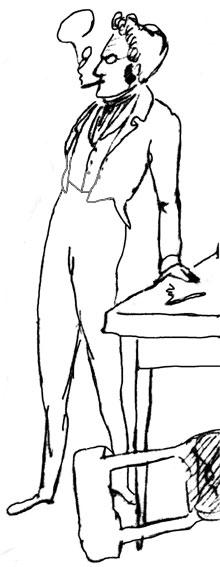
An influential form of individualist anarchism, called “egoism,” or egoist anarchism, was expounded by one of the earliest and best-known proponents of individualist anarchism, the German Max Stirner. Stirner’s The Ego and Its Own, published in 1844, is a founding text of the philosophy. According to Stirner, the only limitation on the rights of the individual is their power to obtain what they desire, without regard for God, state, or morality. To Stirner, rights were spooks in the mind, and he held that society does not exist but “the individuals are its reality”. Stirner advocated self-assertion and foresaw unions of egoists, non-systematic associations continually renewed by all parties’ support through an act of will, which Stirner proposed as a form of organization in place of the state. Egoist anarchists claim that egoism will foster genuine and spontaneous union between individuals. “Egoism” has inspired many interpretations of Stirner’s philosophy. It was re-discovered and promoted by German philosophical anarchist and LGBT activist John Henry Mackay.
Josiah Warren is widely regarded as the first American anarchist, and the four-page weekly paper he edited during 1833, The Peaceful Revolutionist, was the first anarchist periodical published. For American anarchist historian Eunice Minette Schuster “It is apparent… that Proudhonian Anarchism was to be found in the United States at least as early as 1848 and that it was not conscious of its affinity to the Individualist Anarchism of Josiah Warren and Stephen Pearl Andrews…William B. Greene presented this Proudhonian Mutualism in its purest and most systematic form.”. Henry David Thoreau (1817–1862) was an important early influence in individualist anarchist thought in the United States and Europe. Thoreau was an American author, poet, naturalist, tax resister, development critic, surveyor, historian, philosopher, and leading transcendentalist. He is best known for his books Walden, a reflection upon simple living in natural surroundings, and his essay, Civil Disobedience, an argument for individual resistance to civil government in moral opposition to an unjust state. Later Benjamin Tucker fused Stirner’s egoism with the economics of Warren and Proudhon in his eclectic influential publication Liberty.
From these early influences individualist anarchism in different countries attracted a small but diverse following of bohemian artists and intellectuals, free love and birth control advocates (see Anarchism and issues related to love and sex), individualist naturists nudists (see anarcho-naturism), freethoughtand anti-clerical activists as well as young anarchist outlaws in what came to be known as illegalism and individual reclamation (see European individualist anarchism and individualist anarchism in France). These authors and activists included Oscar Wilde, Emile Armand, Han Ryner, Henri Zisly, Renzo Novatore, Miguel Gimenez Igualada, Adolf Brand and Lev Chernyi among others. In his important essay The Soul of Man under Socialism from 1891 Oscar Wilde defended socialism as the way to guarantee individualism and so he saw that “With the abolition of private property, then, we shall have true, beautiful, healthy Individualism. Nobody will waste his life in accumulating things, and the symbols for things. One will live. To live is the rarest thing in the world. Most people exist, that is all.” For anarchist historian George Woodcock “Wilde’s aim in The Soul of Man under Socialism is to seek the society most favorable to the artist … for Wilde art is the supreme end, containing within itself enlightenment and regeneration, to which all else in society must be subordinated … Wilde represents the anarchist as aesthete.” Woodcock finds that “The most ambitious contribution to literary anarchism during the 1890s was undoubtedly Oscar Wilde The Soul of Man under Socialism” and finds that it is influenced mainly by the thought of William Godwin.
Philosophical individualism [edit]
Ethical egoism [edit]
Main article: Ethical egoism
Ethical egoism (also called simply egoism) is the normative ethical position that moral agents ought to do what is in their own self-interest. It differs from psychological egoism, which claims that people do only act in their self-interest. Ethical egoism also differs from rational egoism, which holds merely that it is rational to act in one’s self-interest. However, these doctrines may occasionally be combined with ethical egoism.
Ethical egoism contrasts with ethical altruism, which holds that moral agents have an obligation to help and serve others. Egoism and altruism both contrast with ethical utilitarianism, which holds that a moral agent should treat one’s self (also known as the subject) with no higher regard than one has for others (as egoism does, by elevating self-interests and “the self” to a status not granted to others), but that one also should not (as altruism does) sacrifice one’s own interests to help others’ interests, so long as one’s own interests (i.e. one’s own desires or well-being) are substantially-equivalent to the others’ interests and well-being. Egoism, utilitarianism, and altruism are all forms of consequentialism, but egoism and altruism contrast with utilitarianism, in that egoism and altruism are both agent-focused forms of consequentialism (i.e. subject-focused or subjective), but utilitarianism is called agent-neutral (i.e. objective and impartial) as it does not treat the subject’s (i.e. the self’s, i.e. the moral “agent’s”) own interests as being more or less important than if the same interests, desires, or well-being were anyone else’s.
Ethical egoism does not, however, require moral agents to harm the interests and well-being of others when making moral deliberation; e.g. what is in an agent’s self-interest may be incidentally detrimental, beneficial, or neutral in its effect on others. Individualism allows for others’ interest and well-being to be disregarded or not, as long as what is chosen is efficacious in satisfying the self-interest of the agent. Nor does ethical egoism necessarily entail that, in pursuing self-interest, one ought always to do what one wants to do; e.g. in the long term, the fulfilment of short-term desires may prove detrimental to the self. Fleeting pleasance, then, takes a back seat to protracted eudaemonia. In the words of James Rachels, “Ethical egoism […] endorses selfishness, but it doesn’t endorse foolishness.”
Ethical egoism is sometimes the philosophical basis for support of libertarianism or individualist anarchism as in Max Stirner, although these can also be based on altruistic motivations. These are political positions based partly on a belief that individuals should not coercively prevent others from exercising freedom of action.
Egoist anarchism [edit]
Main article: Egoist anarchism
Egoist anarchism is a school of anarchist thought that originated in the philosophy of Max Stirner, a nineteenth-century Hegelian philosopher whose “name appears with familiar regularity in historically orientated surveys of anarchist thought as one of the earliest and best-known exponents of individualist anarchism.” According to Stirner, the only limitation on the rights of the individual is their power to obtain what they desire, without regard for God, state, or morality. Stirner advocated self-assertion and foresaw unions of egoists, non-systematic associations continually renewed by all parties’ support through an act of will, which Stirner proposed as a form of organisation in place of the state. Egoist anarchists argue that egoism will foster genuine and spontaneous union between individuals. “Egoism” has inspired many interpretations of Stirner’s philosophy but within anarchism it has also gone beyond Stirner. It was re-discovered and promoted by German philosophical anarchist andLGBT activist John Henry Mackay. John Beverley Robinson wrote an essay called “Egoism” in which he states that “Modern egoism, as propounded by Stirner and Nietzsche, and expounded byIbsen, Shaw and others, is all these; but it is more. It is the realization by the individual that they are an individual; that, as far as they are concerned, they are the only individual. “Nietzsche (see Anarchism and Friedrich Nietzsche) and Stirner were frequently compared by French “literary anarchists” and anarchist interpretations of Nietzschean ideas appear to have also been influential in the United States. Anarchists who adhered to egoism include Benjamin Tucker, Émile Armand, John Beverley Robinson, Adolf Brand, Steven T. Byington, Renzo Novatore,James L. Walker, Enrico Arrigoni, Biofilo Panclasta, Jun Tsuji, André Arru and contemporary ones such as Hakim Bey, Bob Black and Wolfi Landstreicher.
Existentialism [edit]
Main article: Existentialism
Existentialism is a term applied to the work of a number of 19th- and 20th-century philosophers who, despite profound doctrinal differences, generally held that the focus of philosophical thought should be to deal with the conditions of existence of the individual person and his or her emotions, actions, responsibilities, and thoughts. The early 19th century philosopher Søren Kierkegaard, posthumously regarded as the father of existentialism, maintained that the individual solely has the responsibilities of giving one’s own life meaning and living that life passionately and sincerely, in spite of many existential obstacles and distractions including despair, angst, absurdity, alienation, and boredom.
Subsequent existential philosophers retain the emphasis on the individual, but differ, in varying degrees, on how one achieves and what constitutes a fulfilling life, what obstacles must be overcome, and what external and internal factors are involved, including the potential consequences of the existence or non-existence of God. Many existentialists have also regarded traditional systematic or academic philosophy, in both style and content, as too abstract and remote from concrete human experience. Existentialism became fashionable in the post-World War years as a way to reassert the importance of human individuality and freedom.
Freethought [edit]
Main article: Freethought
Freethought holds that individuals should not accept ideas proposed as truth without recourse to knowledge and reason. Thus, freethinkers strive to build their opinions on the basis of facts, scientific inquiry, and logical principles, independent of any logical fallacies or intellectually limiting effects of authority, confirmation bias, cognitive bias, conventional wisdom, popular culture, prejudice, sectarianism, tradition, urban legend, and all other dogmas. Regarding religion, freethinkers hold that there is insufficient evidence to scientifically validate the existence of supernatural phenomena.
Humanism [edit]
Main article: Humanism
Humanism is a perspective common to a wide range of ethical stances that attaches importance to human dignity, concerns, and capabilities, particularly rationality. Although the word has many senses, its meaning comes into focus when contrasted to the supernatural or to appeals to authority. Since the 19th century, humanism has been associated with an anti-clericalism inherited from the 18th-century Enlightenment philosophes. 21st century Humanism tends to strongly endorse human rights, including reproductive rights, gender equality, social justice, and the separation of church and state. The term covers organized non-theistic religions, secular humanism, and a humanistic life stance.
Hedonism [edit]
Main article: Hedonism
Philosophical hedonism is a meta-ethical theory of value which argues that pleasure is the only intrinsic good and pain is the only intrinsic bad. The basic idea behind hedonistic thought is that pleasure (an umbrella term for all inherently likable emotions) is the only thing that is good in and of itself or by its very nature. The normative implications of this are evaluating character or behavior as morally good to the extent that one is concerned with pleasure/pain qua pleasure/pain or an action leads to a greater balance of pleasure over pain than any other would.
Libertinism [edit]
Main article: Libertine
A libertine is one devoid of most moral restraints, which are seen as unnecessary or undesirable, especially one who ignores or even spurns accepted morals and forms of behaviour sanctified by the larger society. Libertines place value on physical pleasures, meaning those experienced through the senses. As a philosophy, libertinism gained new-found adherents in the 17th, 18th, and 19th centuries, particularly in France and Great Britain. Notable among these were John Wilmot, 2nd Earl of Rochester, and the Marquis de Sade. During the Baroque era in France, there existed a freethinking circle of philosophers and intellectuals who were collectively known as libertinage érudit and which included Gabriel Naudé, Élie Diodati and François de La Mothe Le Vayer. The critic Vivian de Sola Pintolinked John Wilmot, 2nd Earl of Rochester’s libertinism to Hobbesian materialism.
Objectivism [edit]
Main article: Objectivism (Ayn Rand)
Objectivism is a system of philosophy created by philosopher and novelist Ayn Rand (1905–1982) that holds: reality exists independent of consciousness; human beings gain knowledge rationally from perception through the process of concept formation and inductive and deductive logic; the moral purpose of one’s life is the pursuit of one’s own happiness or rational self-interest. Rand thinks the only social system consistent with this morality is full respect for individual rights, embodied in pure laissez faire capitalism; and the role of art in human life is to transform man’s widest metaphysical ideas, by selective reproduction of reality, into a physical form—a work of art—that he can comprehend and to which he can respond emotionally. Objectivism celebrates man as his own hero, “with his own happiness as the moral purpose of his life, with productive achievement as his noblest activity, and reason as his only absolute.”




 The Individualist