Hamas and Palestine
Leave a reply

by Yaakov Amidror November 2023

Israeli soldiers operate inside the Gaza Strip, November 2023. Photo credit: Israeli Defense Forces/Handout via REUTERS.
As these lines are being written, the war is ongoing and may yet intensify. It is perhaps too early to posit conclusive lessons at this stage. Therefore, I would qualify all of the findings below by suggesting that they must be put to the test of systematic criticism – alongside many of our military and political realities – once the war was over.
This war was launched by surprise, reminiscent of the Yom Kippur War surprise exactly 50 years and a day earlier. The intelligence services failed in the task of early warning, the first line of defense collapsed, the level of losses in the first stage was horrifying, many were taken prisoner, and it was a while before the IDF recuperated and fought back successfully. The main differences, however, are that in 1973 the IDF faced two large and well equipped armies, whereas now it faces a ragtag force without an air force or armor.
In 2023, most of the dead and abducted are civilians murdered or taken from their homes. In this respect, the attack shook up the foundations of Israel’s defense doctrine. The sheer brutality of the Hamas attackers added to the loss of the sense of security among the public at large, since it turned out that across the fence we allowed the rise of a barbaric organization, more cruel than ISIS or al-Qaeda.
At the same time, it should also be said that the IDF did recover in an impressive manner. The shift to a ground offensive aimed at destroying Hamas was conducted in a very orderly fashion and the army and navy used well the period of waiting, during which time the air force was intensively engaged in the Gaza Strip. Combined arms operations have peeled off Hamas defensive layers and the IDF now operates in the urban core of Gaza City, in preparation for taking over the Hamas command and control centers. The IDF will then need to decide when and how to extend its operations so as to eliminate Hamas also in the southern section of the Gaza Strip, and its mission is far from over. The pace is slow, but it enables the IDF to save the lives of its own soldiers while also facilitating the departure of massive numbers of civilians from the battle zones towards the southern part of the Strip.
Nowhere has Hamas succeeded in pushing back IDF advances. While it has not disintegrated, even two weeks into the ground campaign, Hamas’ ability to launch rockets has been significantly degraded and its control over the civilian population is loosening. The highest echelon of Hamas command has survived thus far. But its mid-level command has been badly mauled, probably reducing the effectiveness of its fighting. Still, Hamas troops remain determined, probably because they believe they have no choice. Israel is determined to eliminate them, and thus they prefer to fight to the end.
Four major lessons appear to emerge for Israel’s defense doctrine and for Israel’s future leadership.
First, Israel will need to deploy larger forces to protect its borders. The size of such forces should be assessed on the basis of the bitter lessons of 7 October. Being permanently ready for the “worst possible scenario” will alter the IDF’s planning assumptions for border defense; the criterion should not be not the enemy’s potential but rather the consequences of a surprise attack.
Second, there is no choice but to increase the defense budget. The IDF will be larger and its budget enhanced. The present situation points to a shortage of formations dealing with more than one front, and this lack of capacity must be addressed by expanding the ground forces order of battle. This would not be a revolution but rather a restoration of what has been neglected.
A good example is the missile defense array, extended all over the country and designed to counter a variety of threats. Once the war is over, Israel can point proudly to the successes of Iron Dome, David’s Sling and Arrow 2 and 3 as well as the patriot. They intercepted most of the threats; systemic debriefing would yield future solutions to the few specific failures. In this respect, the war served as a highly significant testing ground.
Third, it is wrong to argue – as some significant critics have done – that too much money has been spent on technology at the expense of training and high levels of combat readiness. As it turns out, ground operations are demonstrating that technology is vital for the IDF’s success in general and for the specific challenges of urban warfare in particular. Iron Dome, “Trophy” (active armored shield protection) and the variety of unmanned aerial vehicles which accompany troops and provide tactical intelligence and “behind the corner” fire cover – all prove the point. Threats are effectively eliminated that once would have exacted heavy losses from similar forces in such situations. Technology repays its investment not only in defense but also in offense, as tools enabling commanders to concentrate great and accurate firepower to remove obstacles to their advance. Investment in innovation must persist.
Finally, basic assumptions in the political as well as the military and intelligence echelons have failed us; things must change. Over the years the defense establishment and the political leadership let go of the concept of a “preemptive strike,” let alone the notion of launching such a war. Imagine if eighteen or six months ago, Prime Minister Binyamin Netanyahu or his predecessors had decided on a preventive ground offensive against Hamas, because the threat was too large and imminent. Friend and foe alike would have lashed at Israel in every forum. America would have reassessed its support, leaving Israel isolated (even in Congress, Israel’s standing would have been challenged due to this “act of aggression”). Russia would have threatened to shoot down IDF aircraft over Syria. The Gulf Abraham Accords partners would have cut relations. Public opinion in Israel would have turned against the government, accusing it of subordinating national security to political needs.
No longer. The mood of the country has been transformed and so should the support for Israel abroad. Israel’s future leaders must restore to the tool kit of national security the understanding that wars of choice are legitimate. Israel must seriously weigh preventive action to push away the buildup of military capabilities which threaten it – not only in terms of the nuclear threat in all its manifestations, but also the removal of acute conventional threats. The “Begin Doctrine” (of preemptive strikes against nuclear targets first in Iraq in 1981, then in Syria in 2007, and beyond) should be applied also to organizations such as Hizbullah when they attempt to acquire tiebreaker technologies. A small country such as Israel, surrounded by many threats but possessing high technology, must occasionally embark on a preventive war. This was the one measure that could have prevented the catastrophe of October 7. But it would not have been seen as legitimate either at home or abroad. This must change.
With the war still raging, it is thus possible – with a great degree of caution – to point out four missions for the military and political leadership after the war. These four should be carried forward based on broad national consensus:

Hamas likely believed that had Israel subscribed to a small-scale approach, they could build on the success of October 7 and effect a change that would result in a new “equation” between the organization and the Jewish state.
Meaning, the release of the imprisoned terrorists, lifting the blockade, and stopping the normalization process between Israel and Saudi Arabia.
By Yossi Kuperwasser
Publish in Israel Hayom on 11-15-2023.
While IDF forces are engaged in Gaza, in what is becoming a protracted war, aiming to weaken Hamas and secure the release of captives, the main effort by Hamas and its backers has been focused on reaching a prolonged ceasefire as much as possible.
Such a ceasefire has operational and tactical importance for Hamas, as the pressure on Israel increases. However, its main significance lies in the strategic arena.
Hamas hopes a ceasefire will compel Israel to change its war objectives and revert to the softer approach that Hamas initially believed Israel would follow right after the Oct. 7 massacre.
I believe that Hamas leaders, despite the severe blow inflicted on Israel, were convinced that the Israeli response would focus on targeted airstrikes that would extract a significant price from the Palestinians and perhaps even a limited ground maneuver – but they never anticipated that Israel would launch an all-out undertaking to eliminate the terrorist organization and deprive it of its military-terrorist capabilities along with retaking the strip.
Hamas likely believed that had Israel subscribed to a small-scale approach, they could build on the success of October 7 and effect a change that would result in a new “equation” between the organization and the Jewish state.
Meaning, the release of the imprisoned terrorists, lifting the blockade, and stopping the normalization process between Israel and Saudi Arabia.
Hamas assessed that Israel’s weakness and its problematic relations with the United States, coupled with its inherent reluctance to pay the high price involved in a broad military operation to remove Hamas from Gaza, would ultimately prevent it from completely defeating Hamas, just like in previous flare-ups.
In previous rounds, whenever the fighting ended, both sides licked their wounds, but Hamas would then quickly recover and posed a threat to the Gaza area and Israel as a whole.
This time Israel adopted, to the surprise of Hamas, a different approach that could strategically weaken the organization without precedent, thereby also affecting both radical factions associated with the organization: the radical axis led by Iran on the one hand, and the Muslim Brotherhood axis, which includes Qatar and Turkey, on the other.
All actions by Hamas, Iran, and its proxies (Hezbollah, the Houthis, and Shiite militias in Iraq), Qatar, and Turkey should be seen in the context of the attempt to persuade President Joe Biden to pressure Israel to stop the fighting and eventually adopt an alternative approach.
This effort motivates them to create the impression that there is a severe humanitarian crisis in Gaza. It is what made Hamas play a cynical game with the captives, and this is also what has prompted the Shiite militias in Iraq to step up their actions.
Likewise, this explains the gradual escalation by Hezbollah in the north and the missile launches from the Houthis, and the potential expansion of the conflict by Iran and its allies.
This is also the context through which we must treat the numerous protests in Western capitals calling for a ceasefire. Even Jordan and Egypt are joining the chorus for various reasons, primarily due to the concern about a flow of Palestinian refugees into their territories.
The Palestinian Authority seemingly calls for a ceasefire, but it is unclear if it is genuinely interested in one.
So far, Hamas and its allies’ efforts have been unsuccessful.
Biden is under pressure, along with most Western leaders. They understand the importance of Israel’s success in undermining Hamas and the moral justification for it.
Israel’s recent moves, such as advancing on the ground, exposing the illicit Hamas activity at the Rantisi Hospital, and continued close coordination with the US. regarding the management of the conflict against Hezbollah, contribute to President Biden’s ability to withstand pressure.
As the fighting continues, Israel will need to remind Western leaders, led by Biden, that letting Hamas stay in power would be beyond the pale and that Israel can bring about its demise within a reasonable time without causing a humanitarian disaster in Gaza or leading to actions that would escalate the conflict into a regional war.
This is how Israel would be able to get room for action and the time needed to achieve its strategic goals, even if it agrees to short ceasefires/pauses to release the captives.
Written by Eli Etsion (My dear and always loved nephew)
A word and some thoughts to my English-speaking friends/family – please feel free to share this:
Anywhere in the world, when you step out on your way to the grocery, mall, school… you don’t have any actual fear for your life – right? Sure, there could be an accident; you might miss a step and fall.. but will you encounter a masked person with a knife, screaming and aiming to kill you with it? Will you be sitting in a restaurant and being blown up? Do balloons explode or ignite fires where you live? Do you hear air-raid sirens, followed by explosions of actual rockets hitting the ground or houses around you?
Take a moment and try to imagine a nation of people who go to college, work in offices, ride busses, go to parties, dance, eat out, enjoy good wine, read books, watch Netflix.. all of those and much more JUST LIKE YOU, but with all that terror and danger always lurking.
What does this do to our souls?
Every now and then, the local conflict rises to a level of war. It’s never gone, but most of the time we live with it. We don’t like it, but it’s always been like that for our nation.
This recent rise has been unique. It brought us back to the darkest of times the Jewish people have ever experienced. The sheer mass of civilian lives lost in those hours of October 7th… still incomprehensible – maybe we will never really be able to grasp.
The voice of Hamas and its supporters is strong and effective – it is making waves that seem to be giving the world a very narrow view of what is happening in Gaza. So you all march, chanting “Free Gaza”. Free it from whom?
Nearly 2 decades ago, Israel withdrew all military and civilian presence from the Gaza Strip. It was Hamas who took over, with force, while overthrowing the rule of the Palestinian Authority – killing their people, tossing them from rooftops… This was not in any way the doings of Israel.
Hamas has taken every cent, nickel, and dime for its own purposes: It is investing everything in protecting itself, arming itself, and lining the pockets of its leaders. These so-called “leaders” keep saying that freedom comes with sacrifice – while sitting comfortably in posh luxurious hotel suites in Qatar, Turkey…
Israel is fighting a righteous battle in the aim of ridding its own citizens from long years of terror attacks from Gaza. Those villages and towns attacked on October 7th are filled with teenagers who can’t even grasp the notion that there is such a thing as living without sirens, explosions, and constant fear. They think ALL teens wet their beds, that everyone has a safe room made of thick concrete in their homes – how else can you survive, right?
If you find yourself disturbed by what Israel is doing in Gaza – be advised that we are not only killing… we are also making sure civilians can evacuate safely, even protecting them from Hamas, who fires at them while they flee. We are taking care of those who need medical care; we do not wish to take any unnecessary life – any.
Do you feel Gaza should be set free? So does Israel. While those who have no true knowledge of what’s at stake and march in the safe streets of London, New York, or Washington DC keep yelling and displaying Antisemitic posters – Israel is freeing Gaza from the tyranny of Hamas – the same people and doctrinarian of ISIS, the same extreme and fundamental terror in the name of Islam.
Do you want to do good? Do you seek true and just peace? Do you want the Palestinian civilians of Gaza to have a chance for a better life? How about the Israelis on the other side of the border?
If you want all of that – support Israel, let us do it right.
Two and a half years ago, Michael Oren wrote:
“Israel must determine its goals in Gaza, whether merely reducing Hamas’s capabilities or fully demilitarizing the Strip. It must state its intention to eliminate all of Hamas’s leadership, military and political alike. The international community must be apprised of those goals and fully forewarned about their cost. And our leaders must speak candidly to Israelis about the price they will have to pay for a more prolonged period of quiet. By acting responsibly now, Israel can conceivably achieve more in terms of deterring Hamas. The terrorists will be subdued temporarily, perhaps for a decade or more. And when the dust settles from that awful, necessary defense, as in the last confrontations so again in the next one, it will be the Israelis who are still standing.”
A very long but accurate description of the Gaza issue.
Written by Michael Oren and Published by MOSIAC – Advanced Jewish Thought
June 7, 2021
About the author: Michael Oren, formerly Israel’s ambassador to the United States, a member of the Knesset, and a deputy minister for diplomacy, is the author of the forthcoming Swann’s War.
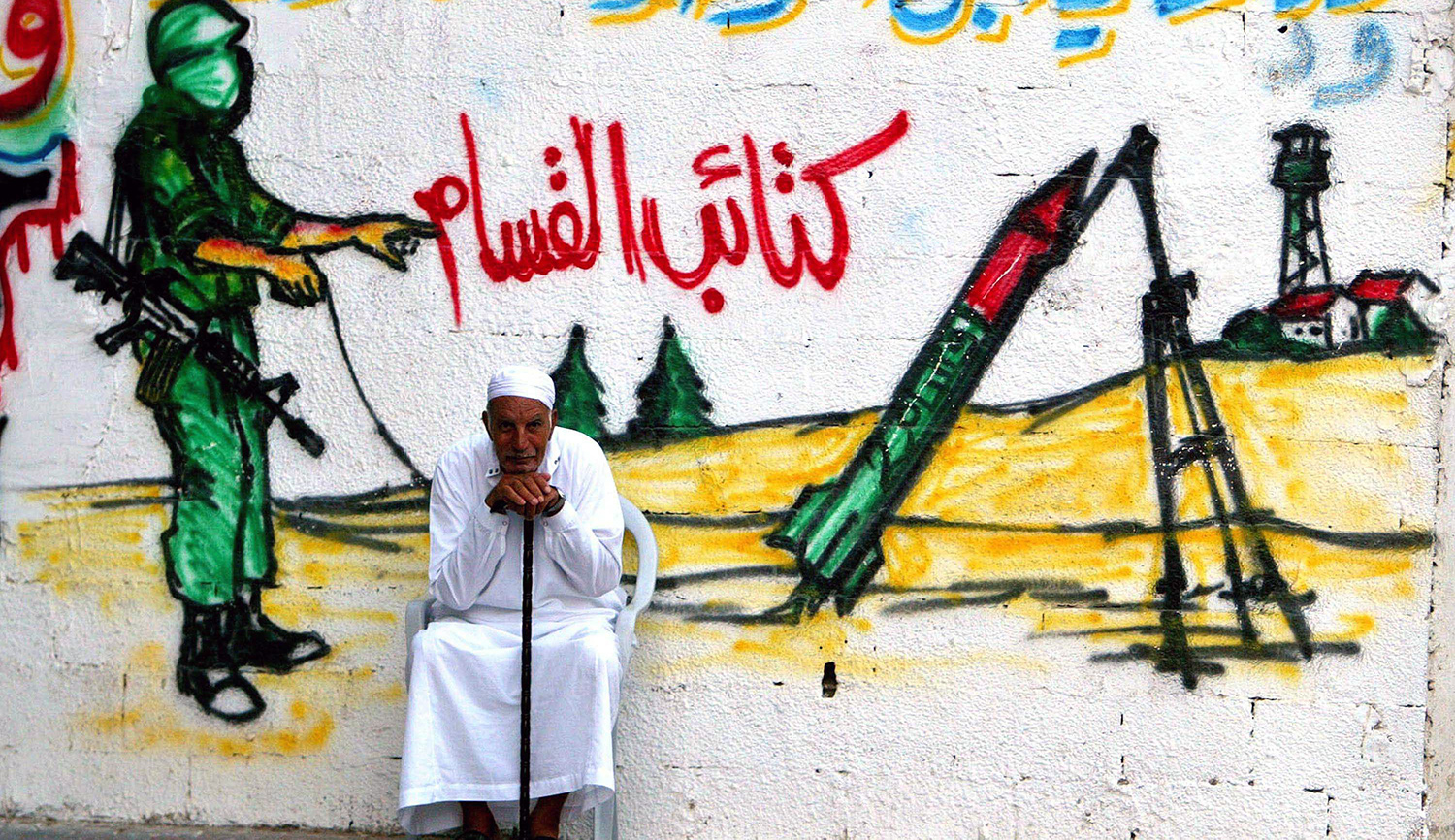
In January 2009, in Georgetown University’s august Gaston Hall, I took to the stage to speak about Gaza. Virtually all 700 seats were occupied, many by students who opposed Israeli policies, especially those concerning the Gaza Strip. A visiting professor at Georgetown’s Center for Jewish Civilization, I had recently returned to Washington from a winter break back in Israel where I’d hoped to vacation with my family. Instead, I spent three weeks serving as a reserve officer in Cast Lead, Israel’s operation against Hamas.
I returned to find the campus in an uproar, the entrance to my building blocked by prostrate protestors holding “Dead Gazan” signs. My lecture was intended as a response to that outcry, to place the Gaza issue in its full historical, military, and diplomatic context. The goal was to expose students to a perspective that they could never receive from the media or most of their professors. For once, they would see the Strip from an Israeli point of view.
Watching the video of that talk last month was an unsettling experience, and not only because of the degree to which I’ve aged. Far more disturbing was seeing how little has changed in the last twelve years. Though Israel’s ability to defend itself has been vastly augmented by the Iron Dome anti-missile system, its right to do so has been increasingly impugned. And nowhere in America has Israel’s case or even the freedom to make it been more strenuously denied than on college campuses. Most dismaying of all was the realization that American ignorance about Gaza and the terrorist regime that ruled it has only deepened over the years, in many cases willfully.
My purpose now is to redress that ignorance. Drawing on 40 years of academic, military, and diplomatic experience with Gaza, I intend to trace Israel’s complex and tortured relationship with the Strip, both in the earlier decades of the state and then especially in the last fifteen years. And, as at Georgetown in 2009, I’ll explore how that relationship might change in the future.
I. Pre-History
Gaza has a rich and varied history. Situated on the Mediterranean coast in the nexus between continents, it was traditionally an interface between competing empires, an arena for war as well as a marketplace for cultural and economic exchange. Archaeologists have uncovered Egyptian mummies in Gaza along with Roman temples and Byzantine synagogue floors. As a soldier patrolling Gaza many years ago, I noticed the top of an ancient Greek column protruding from a garbage heap. The relic later served as a teaching aid in my history classes.
Gaza’s heyday came in the Middle Ages under Arab rule when it thrived as an entrepôt in the spice and textile trade. (The English word gauze may derive from its name.) But thereafter the area’s fortunes waned so much that, by the time Napoleon’s forces entered Gaza after the French invasion of Egypt in 1798, they found the Strip eerily under-populated and rife with pestilence and poverty. (A portion of Gaza’s native population is made up of the descendants of Egyptians from the Delta area who fled conscription laws put in place in the early 19th century by Muhammad Ali, the governor of Ottoman Egypt.) After that, Gaza was the scene of some of the heaviest fighting between Turkish and British forces during World War I. The victorious British worked to have Gaza incorporated into their mandate in Palestine, not because they saw Gaza as part of the Jewish national home but because Gaza guarded the northern approaches to the Suez Canal. British engineers nevertheless vetoed a plan to build a major military base there, arguing that the territory lacked sufficient water.
Historically, Jews have had an ambivalent relationship with Gaza. It was home to the Philistines, a place where a Hebrew hero was liable to get his eyes plucked out.
The Zionists, for their part, were uncertain they wanted Gaza in their future state. Historically, Jews have had an ambivalent relationship with Gaza. It was home to the Philistines, a place where a Hebrew hero was liable to get his eyes plucked out and where Jewish defeats were celebrated. Rabbinic sources were divided over whether Gaza fell within the borders of the Land of Israel. Zionism internalized that schism. Before the creation of the state, only one major Jewish settlement was established in the Gaza strip, Kfar Darom, later to be abandoned in Israel’s War of Independence. Zionist leaders did not object when the UN in 1947 placed Gaza within the confines of the proposed independent Arab state.
But Israel’s lack of interest in Gaza ended in 1948 with the flight of Palestinian refugees. Within weeks, Gaza’s population swelled from less than 80,000 to more than 200,000. Occupied by Egypt, Gaza held Israel on the left side of a hostile vise, with the West Bank, soon to be annexed by Jordan, holding the right. Cognizant of this strategic threat, Prime Minister David Ben-Gurion in 1951 secretly proposed purchasing Gaza from Egypt and resettling the refugees in Sinai. The Egyptians ignored his offer.
Israel’s problems with Gaza multiplied in the early 1950s with the emergence of the fedayeen. These Palestinian “self-sacrificers,” guerrilla fighters trained and armed by Egypt, struck deep within Israel, killing civilians and ransacking houses. In response, the IDF mounted numerous retaliation raids, some of them led by a controversial young officer named Ariel Sharon. This accelerating cycle of terror and reprisal contributed to the outbreak of the second Arab-Israeli war in October 1956.
That conflict ended with Israeli troops occupying Gaza for five months, after which they were replaced by the first-ever UN peacekeeping force. Its precipitous eviction by Egyptian President Gamal Abdul Nasser in May 1967 set off a chain of events that would lead to the Six-Day War. Indeed, that transformative conflict originated to a significant degree in Gaza. Defense Minister Moshe Dayan at first explicitly ordered the IDF not to enter it, but after fire from Palestinian irregular and Egyptian forces, Israeli troops couldn’t help but do so. Thus began an occupation that would last for 38 years.
Shortly after the war, in the late 1960s, Gaza became a power base for the Palestine Liberation Organization (PLO). Originally created by Nasser, the terrorist group had come under the domination of the Fatah faction and its chairman, Yasir Arafat. Israeli forces led by Sharon drove the PLO underground in Gaza in the early 1970s, opening the way for the establishment of the first settlements in the Strip.
But the old Israeli ambivalence toward Gaza remained. In contrast to the West Bank, the biblical heartland of Judea and Samaria, in which 130 settlements were eventually established and 400,000 Israelis made their homes, Gaza hosted a mere 21 settlements and only 8,000 residents. Indeed, in the peace talks between Israel and Egypt in the late 1970s, Prime Minister Menachem Begin, though a champion of settlement, offered to give Gaza back to Egypt. Anwar Sadat, Egypt’s president, turned him down.
The Palestinian population of Gaza meanwhile burgeoned, growing to nearly two million today. A similar growth rate in the United States would, in a comparable timespan, have catapulted the population to one billion. Gaza’s demographic explosion was significantly enabled by the United Nations Relief and Works Agency, UNRWA. It remains the only UN body created to deal with a specific refugee problem, and which bestows refugee status on the descendants of the refugees from 70 years ago. UNRWA recognizes Palestinian refugees who are technically living in what they themselves call Palestine—in Gaza and the West Bank—and sustains the refugee camps that keep the Palestinian issue alive.
As an IDF officer in the early 1980s, I was involved in an effort to encourage residents of those camps to move to newly created housing projects. The few refugees who did express an interest in relocating were quickly threatened by the PLO, and they rescinded. The projects remained vacant.
Though tens of thousands of Gazans crossed into Israel to work each day and the local economy grew, a combination of PLO incitement and overcrowding created a powder keg. It ignited in December 1987, in the form of the first—as we later called it—intifada. Thousands of Palestinian youths took to the streets, pelting Israeli troops with rocks and Molotov cocktails in an uprising that rapidly spread to the West Bank as well. I served as a reservist with the paratroopers in Gaza during those years. I dodged a great number of rocks and even a few firebombs. Patrolling those fetid streets, it was never clear to me what business Israel had being in Gaza other than to deny the Palestinians the victory of kicking us out. The refugee camps were labyrinths in which each alley was controlled by a different terrorist group, their names scrawled on the walls. One of the scrawlings was unfamiliar to me. It read “Hamas.”
Its name an Arabic acronym for “Islamic resistance movement,” Hamas was then headed by a blind wheelchair-bound sheikh, Ahmed Yassin, and a pediatrician, Abdel Aziz al-Rantisi. Like its parent organization, the Egyptian Muslim Brotherhood, Hamas back then spent the bulk of its budget on social services, but it also had a charter that blamed the Jews for outbreak of both world wars and called for Israel’s destruction. Israel was then quietly supporting Hamas as a counterweight to the secular PLO. (Not since the United States backed the Taliban in their struggle against the Soviet Union has a policy been so short-sighted.) Israel’s support for Hamas didn’t last long, though. By the early 1990s, Hamas was mounting attacks against Israelis, to which Prime Minister Yitzḥak Rabin responded—unsuccessfully—by trying to banish 400 Hamas activists to Lebanon.
The rising prominence of Hamas pushed Israel and the old PLO leadership nearer to each other. The first intifada had convinced a large segment of the Israeli population that the occupation was no longer viable, while the revolt of young Palestinians not under his command frightened Arafat into thinking that he might lose control of the territories entirely. The result came in September 1993 on the White House lawn, where Rabin and Arafat joined President Bill Clinton in signing the Oslo Accords.
Under the so-called Gaza-first approach, the Strip was to serve as a litmus test for the broader Oslo project, and it was to Gaza that Arafat made his triumphant return to the territories that June. I was in a quasi-official position back then and watched as Arafat smuggled wanted terrorists literally under the seat of his car. In response, Rabin considered freezing the peace process but ultimately demurred. Arafat thus learned that he could violate the accords without paying a price, which he would from then on do with impunity. He subsequently felt free to play a double game in Gaza, clamping down on Hamas when he needed to while turning a blind eye to its terrorist attacks against Israelis.
Needless to say, the Gaza-first approach failed. Over the course of the next decade, Hamas would mount a total of 70 suicide bombings against Israel, killing 483 Israelis, including not only my sister-in-law (a teacher from Connecticut studying at Hebrew University) but several of my children’s classmates too, as well seven customers at the Cafe Hillel located directly under my Jerusalem office. Israelis felt helpless in the face of this scourge. “Abba, I’ve been to more of my friends’ funerals than bar mitzvahs,” my eldest son, Yoav, complained. Later, as a special-forces soldier, he would be shot and wounded by a Hamas terrorist who was firing from behind his own children. Even Benjamin Netanyahu, elected in 1996 in part thanks to his hardline approach to Hamas, was forced under American pressure to trade Yassin, who had been arrested by Israel in 1989, for two Mossad agents after a botched assassination attempt against Hamas leader Khaled Mashal.
Meanwhile, other Palestinian militias started to compete with Hamas in the bombings. The terror climaxed in the second intifada, beginning in September 2000. Once again called up for reserve duty, I saw how completely the army was caught off guard. Units were sent off frantically—mine to Nablus—without any clear strategy for fighting back or even the proper armaments. Among the surprises that Hamas sprung on us that year was the Qassam rocket, made usually out of irrigation pipes smuggled from Israel and propellant mixed from household chemicals. The projectiles had a maximum range of only fifteen kilometers and were notoriously inaccurate, but when they hit they were deadly. Twenty-eight Israelis were killed and a thousand were wounded. The southern part of the country was paralyzed.
And yet Israel kept trying to maintain a fictive distinction between the political and military wings of Hamas, permitting the former to function while seeking the latter’s destruction. After every suicide bombing in Tel Aviv and Jerusalem, the Israeli press would rush to interview Yassin and Rantisi and ask whether they approved, which of course they did. It was surreal.
II. 2002-2008
The month of March 2002 was the bloodiest of all the months of all the intifadas, with 130 Israelis killed. A new government under Ariel Sharon launched a major operation, Defensive Shield, to retake Palestinian cities and crush the terrorist cells. By 2004, Rantisi and Yassin were dead and the intifada, one of the direst threats to Israel in its history, defeated. A combination of robust military measures—checkpoints, defensive barriers, close cooperation between combat and intelligence units—effectively ended the suicide bombings. By then Arafat had died as well, which meant that Sharon, no less a champion of settlements than Menachem Begin before him, was free to do as he chose at that point in Gaza. What he chose shocked many Israelis.
Sharon believed the country was tired of defending the Gaza settlements and the fourteen-kilometer-long Philadelphi Route, running along the border between Egypt and Gaza, on which Israel soldiers were constantly attacked. Israel, Sharon concluded, could no longer ask parents to sacrifice their children for an area that held little value for them. At stake was the delicate consensus binding Israel’s society to its army.
Thus in August 2005 I found myself back in uniform, one of the 55,000 Israeli soldiers called up to remove 8,000 of our fellow citizens from Gaza. It was the largest Israeli military operation since the 1973 Yom Kippur War. Though I, like the large majority of Israelis, supported the disengagement, nothing could prepare me for the trauma of implementing it. Nothing I had experienced in war was as harrowing as having to drag Israelis, praying and wailing, from their synagogues and homes.
The Gaza disengagement was a tremendous gamble for Sharon and for Israel. We all knew that the Palestinian terror organizations, Hamas in particular, would declare victory. Yet we hoped that the Palestinian people would seize this historic opportunity to build an independent mini-state. The gamble failed. No sooner had the last Israeli exited the Strip when the Palestinians dismantled the agricultural infrastructure left behind to aid their economy, much of it paid for by American Jewish philanthropists. Over the next six months, terrorist groups fired some 1,000 rockets and mortar shells into Israel.
At this point Israel faced a dilemma that would hound it for the next fifteen years and will likely plague it for many more. Shooting back at Hamas enhanced Hamas’s prestige in the eyes of the Palestinian people—it proved they were resisting Israel and sacrificing themselves for the cause—but not firing back at Hamas enhanced its prestige as well by showing that Israel was scared. More ominously for Israel, this heightened stature also attracted the attention of Tehran. In time, Iran would become Hamas’s primary backer.
Shooting back at Hamas enhanced Hamas’s prestige in the eyes of the Palestinian people, but not shooting back enhanced its prestige too.
Israel responded with a naval and air blockade of Gaza. The actions failed to reduce significantly the rocket fire, but they did strengthen Hamas’s casus belli against Israel. Sharon refused to consider reconquering the Strip and instead contemplated a unilateral withdrawal from parts of the West Bank as well. He and his new party, Kadima, were poised to implement that very policy in January 2006 when he fell into a coma from which he would never recover. His replacement was former Jerusalem mayor Ehud Olmert.
Elections, meanwhile, were held in the Palestinian territories. As I recall it, Israelis watched with horror the campaign ad of Hamas candidate Maryam Farhat, also known as Umm Nidal. She invited viewers into her home and showed them a gold-framed photograph of a young man in a Hamas military outfit. “This is my eldest son who martyred himself by blowing himself up on a Jewish bus and killed eight Jews,” she exulted. “It was the happiest day of my life.” She then displayed another photo of a young Hamas terrorist. “This is my second son who blew himself up attacking Jewish soldiers,” she claimed. “It was the happiest day of my life.” Finally, Umm Nidal introduced her seventeen-year-old son, also uniformed and bearing an M-16. “He’s about to go out to martyr himself now, and this is the happiest day of my life,” she declared while kissing him. He then went out and, attempting a terror attack, was killed by Israeli soldiers. (The claims about her first two sons appear to be inaccurate. The first didn’t murder by blowing himself up but rather by guns and grenades, and the second was killed before he could accomplish his mission.)
Umm Nidal won. The mother of three martyred sons joined dozens of Hamas representatives elected to the Palestinian parliament in a landslide victory over Fatah.
Predictably, Hamas celebrated its triumph with rockets. It exploited an Egypt-mediated ceasefire to dig a 400-meter-long tunnel under the border. On June 25, 2006, terrorists snuck through the tunnel and attacked an Israeli position, killing two soldiers and kidnapping a third, the nineteen-year-old corporal Gilad Shalit. The IDF’s attempts to respond to this attack by blowing up the many tunnels that Hamas had dug under the Philadelphi Route ended with Israeli soldiers scouring the sand for the body parts of their comrades.
Hoping to avoid all-out war, several European states volunteered to supervise the border crossings between Gaza and Israel. The monitors soon arrived but fled the minute Hamas threatened them. Thousands of tons of munitions, rifles, grenades, and rockets passed into Gaza from Egypt. It was at this depressing juncture that Hizballah, Iran’s terrorist proxy in Lebanon, triggered a war with Israel.
Like Hamas, Hizballah had also been emboldened by the Israeli withdrawal from Gaza and from southern Lebanon five years earlier. Though technically Hamas’s ally, Hizballah was also its competitor. In the wake of Hamas’s victories, Hizballah could scarcely sit by and let its rival take all the glory. On July 12, 2006, its gunmen ambushed an Israeli border patrol, killing ten and taking two of the bodies for ransom. Israel responded, and the Second Lebanon War began.
Though the IDF killed as much as a quarter of all of Hizballah’s forces and destroyed a large part of its infrastructure, Hizballah nevertheless continued to rocket Israeli cities. It, too, claimed a great victory. Vilified in the media for acting disproportionately, and increasingly pressured by the international community, Israel was compelled to accept a UN ceasefire. Hizballah was allowed to rearm.
Many Israelis linked the Gaza disengagement to the disappointing Second Lebanon War. I served in the army throughout that conflict and, on its last day, found myself along the border. There I encountered Natan Sharansky, then a government minister. “Natan, Natan, it’s so good to see you,” I greeted him. But he merely grinned at me and asked, “Do you still think the disengagement was a good idea?”
It was certainly not a good idea to fail to respond immediately and massively to the Hamas rocket attacks, to signal instead that Israel would passively bear violence perpetrated against it, and to project an image of weakness. My feelings as a soldier merged with my perspective as an historian and my instincts as a citizen—namely, that Israel was hemorrhaging deterrent power, making clear our fear of military and civilian losses, and generally becoming predictable. Our failure to inflict truly prohibitive punishment on our enemies, and to withstand international pressure, would, I feared, lead to only further rounds of bloodshed and a faster erosion of Israel’s legitimacy.
Indeed, Israel’s reluctance to confront Hamas and the consequent boost to the latter’s prestige may have emboldened the terrorists to mount a bloody coup against Fatah in Gaza. Swiftly overpowering U.S.-trained Palestinian Authority forces in June 2007, Hamas proceeded to execute 350 prisoners and banish hundreds of others. Many found asylum in Israel.
Israel reacted by imposing its partial blockade of the Gaza border crossings, but the policy proved problematic. Though the United States and the European Union all recognized Hamas as a terrorist organization and generally supported the blockade, Israel was internationally censured for cutting off vital supplies. In a classic fashion, Hamas shelled the gas stations providing fuel to Gaza and then blamed Israel for creating a humanitarian crisis. Gas shipments resumed, only to be used as a propellant for Qassam rockets.
The blockade, once again, furnished Hamas with a pretext for intensifying rocket and mortar attacks. Thousands of rockets fell, and citizens of southern Israel felt betrayed by their state. Still the government hesitated. The army had yet to recover from the Lebanon war and Olmert was facing several corruption charges. But equally paralyzing—again—was fear of the price Hamas would exact from the IDF and the possibility that Hizballah would again join the fray.
Another Egyptian-brokered ceasefire was arranged. Israel would reopen the crossings and Hamas stopped firing. But Hamas never really complied. A steady tiftuf—Hebrew for drizzle—of two or three rockets weekly kept millions of Israelis terrorized. Olmert appeared on Arabic television appealing to Hamas for restraint. Foreign Minister Tzipi Livni did the same in a last-minute visit to Cairo. But the salvos only increased.
III. 2008-2009
Hamas would now experience what Dwight Eisenhower called the fury of an aroused democracy. More than 90 percent of Israelis said they were ready to take on the terrorists militarily. Somehow, more than 100 percent of those called up reported for reserve duty, I among them. On December 27, 2008, the counterattack began.
Operation Cast Lead, it was called, a reference to Hanukkah and a holiday poem by the pioneering Zionist poet Ḥayyim Naḥman Bialik. In a scenario that would repeat itself three more times over the next twelve years, Israel responded to Hamas rocket attacks with intensive aerial strikes. Eighty aircraft hit 100 targets in less than four minutes. Two hundred Hamas guards, convinced that Israelis would never harm them, were out on parade that day. They died instantly. Over the course of the next six days, the IDF would fly 2,000 sorties, destroying dozens of Hamas command posts, arms caches, rocket launchers, and 300 of the estimated 500 tunnels running under the Philadelphi route. This time, there was no distinguishing between Hamas military and political targets. The homes of Hamas leaders, mosques used as arms depots, even the Islamic university, which Israel claimed was being used as a bomb laboratory, were leveled.
But, in another feature of the war that would reappear in the future, Israel sacrificed the element of surprise by leafleting areas that were targeted for strikes and warning the civilian population to flee. Text messages were sent to thousands of phone owners also warning them of impending attacks. Hamas sent civilians up on the roofs of targeted buildings, compelling Israeli pilots to divert missiles even after they had been fired. In response, the Israeli Air Force would try to clear the roofs of civilians by firing a form of non-lethal flash weapon before launching any explosive rounds. The method did not always work. Nizar Rayan, the third in command in Hamas, refused to let his family and his children leave the building after they were warned to do so. All four of his wives and as many as eleven of his children were killed.
The rockets kept falling, averaging 70 per day, ultimately totaling 800. No longer a combat soldier but an IDF spokesman by that point, I nevertheless remained under fire and more than once had to run, microphones and even cameras in tow, for shelter. A mere fourteen-and-a-half seconds separated the launching of the Qassams from their impact. Together with Arab and European reporters, I crouched and listened while several Sderot residents, stricken with chronic PTSD, screamed.
A mere 14.5 seconds separated the launching of the rockets from their impact. Together with Arab and European reporters, I crouched and listened while several Sderot residents, stricken with chronic PTSD, screamed.
Though the number of Hamas rockets and mortars fired then was small compared to that of subsequent conflicts, they nevertheless produced in Israel significant damage because the Iron Dome anti-missile system that would later prove so successful had not yet been developed. The Hamas rockets also had a longer range than they had before, extending from fifteen to forty kilometers and endangering a million Israelis. One of them was our daughter, Lia, a student at Ben-Gurion University in Be’er Sheva. When the sirens began, she abandoned her car at an intersection and ran frantically for a bomb shelter, couldn’t find one, and went banging on various doors asking for shelter. Luckily, a nice old lady let her in, gave her lunch, and wanted her to stay, but Lia had to refuse. The car was still idling in the intersection.
Learning its lessons from the most recent Lebanon war, in which it had publicly declared specific goals it couldn’t meet, like the elimination of Hizballah from southern Lebanon, Israel kept its objectives broad and achievable: impair Hamas’s ability to shell Israel, restore security to southern Israel, and improve the security situation in Gaza.
And since Israel had learned another lesson from Lebanon, too—that warplanes alone cannot eliminate rocket fire—on January 3, 2009, 10,000 Israeli troops soldiers advanced into Gaza. They divided the Strip into three parts, hampering Hamas’s ability to transport men and munitions. Israeli commandos landed on the sea, further driving Hamas fighters inward into urban areas. They fled, rarely fighting, and their leaders hid under hospitals. Left to take the brunt of the advance were the civilians whom Hamas used as human shields. The IDF again took precautions to limit civilian casualties, but the casualty rate nevertheless rose. Efforts to stop Red Crescent ambulances that actually served to transport Hamas terrorists were harshly condemned by the International Red Cross—which, of course, didn’t complain publicly about Hamas’s abuse of the ambulances.
Throughout the fighting, the IDF took extraordinary measures to relieve Gaza’s humanitarian crisis. Some 27,000 tons of food and medical supplies and 240 tons of fuel were delivered to the Strip. A corridor was opened for relief trucks and a three-hour daily truce declared so that Gazans could stock up on supplies. But Hamas regularly violated that truce. It seized flour shipments from relief trucks and sold them for profit. My unit discovered that one of these aid trucks was transporting not food, as labeled, but Hamas military uniforms.
Civilian casualties quickly became an international focus. The IDF concluded that no more than 25 percent of all Palestinian casualties were civilian. The UN put the number at 40 percent and Hamas itself at 50 percent. Yet even that undoubtedly inflated number compares favorably to that of NATO’s 1999 intervention in the Balkans, where 150 fighters were killed versus 527 civilians. Over the course of the wars in Iraq and Afghanistan, coalition forces killed an estimated 250,000 civilians. Operation Cast Lead may have had the lowest civilian-to-soldier casualty ratio of any urban combat in recent history.
A similar asymmetry existed in the physical damage Israel inflicted on Gaza. Palestinian sources claimed that 4,000 homes were destroyed and 100,000 people left homeless. That was a tragedy. It must also be seen in context. A single battle in Fallujah during the second U.S. war in Iraq displaced 300,000. And many of the Gazan homes were devastated not by Israel but by Hamas booby traps.
None of these facts had much effect on the media, which described Gaza as the most densely populated area on earth—it isn’t; Tel Aviv is more densely populated, as are many other places—and that Israeli forces were firing indiscriminately. Reports of atrocities circulated. In a typical incident, the French press, quoting Palestinian sources, claimed that Israeli forces had bombed a UN school, killing 21 children. The story quickly leapt onto the international wire services, which cited only the French and left out the Palestinian sources, and inflated the number of children killed to 53. Israel’s anemic response was “We will launch an investigation.” That took three weeks and found that the IDF bomb had in fact fallen outside the school, where it had killed nine or ten Hamas terrorists and two civilians, neither of them a child. The damage to Israel’s image in the meantime, however, was irreparable.
Much of the Western world was uniting against Israel over Gaza, but the Middle East was becoming divided. Despite the Palestinian Authority’s attempts to portray Israelis as the aggressors, and Hamas’s efforts to ignite a third intifada, the West Bank remained generally quiet. So, too, did much of the Arab world, especially the Sunnis. If, during its previous wars, Israel would worry over the impact on the “Arab street,” that street had moved to London and Paris, which were then the scenes of violent protests, while the Middle East itself remained largely silent. After grilling me for minutes about alleged Israeli war crimes, a Palestinian reporter for an Arabic-language station pulled me aside and whispered, “Whatever you do, don’t stop until you’ve annihilated Hamas.” But while Sunnis like him expressed next to no support for Hamas, Iran and its Syrian satellite did support their proxy virulently, and accused Israel of doing to the Palestinians what they denied the Nazis ever did to the Jews.
By the end of the third week of fighting, it was clear to many in Israel that the operation had to end. Barack Obama was about to be inaugurated and the last thing anybody wanted was for the new president of the United States to have to proceed directly from the swearing-in ceremony to the White House situation room and deal with our crisis. Israel had already demonstrated its determination to defend itself. Rocket fire had dwindled. Twenty-two days after the operation began, with its troops nearing the center of Gaza City, Israel declared a unilateral ceasefire. Hamas followed suit the next day. The last IDF soldier withdrew from Gaza a day before President Obama’s inauguration.
IV. 2009-2021
A few months later, I was appointed Israel’s ambassador to the United States. Portentously, my first meeting in the Oval Office dealt almost exclusively with Gaza. President Obama insisted that Israel allow shipments of concrete into the Strip to help restore damaged structures. My first words spoken to him were about the number of tunnels under the Philadelphi route. “We thought there were 200, but it turned out there were 500,” I said, and the president seemed genuinely surprised. Also, I added, “Every bag of concrete will be used for building bunkers and tunnels.” But Obama merely nodded, clearly unconvinced. Israel eventually relented to his pressure and allowed thousands of bags of concrete to enter Gaza, where they were promptly put to use building bunkers and tunnels. It took years before Dennis Ross, the American emissary to Israel who was also present at the meeting, admitted that the warning had been right.
Gaza proved to be the leitmotif of my term as ambassador. From the ill-fated effort by IDF commandos to divert a flotilla of Islamic radicals from reaching Gaza in May 2010 to Israel’s release, in October 2011, of nearly a thousand jailed terrorists in exchange for captured corporal Gilad Shalit, the issue took up great swaths of my time. While generally supportive of Israel’s right to defend itself against Hamas, the administration insisted that Israel submit to a UN investigation of the flotilla incident and criticized Israel for the Shalit deal which, the White House claimed, strengthened Hamas at the expense of the Palestinian Authority. Meanwhile, efforts by J Street and pro-Palestinian organizations to promote the UN’s Goldstone report, accusing us of war crimes, kept Israel perennially on the defensive.
The whirlwind surrounding Gaza climaxed in November 2012 with Operation Pillar of Defense. Lasting eight days, this was a miniature re-enactment of Cast Lead, with Hamas and Islamic Jihad firing some 1,500 rockets at Israel and, for the first time, hitting Tel Aviv and nearly reaching Jerusalem. Israel again responded with airstrikes and was again assailed for acting disproportionally. The charge was strengthened—perversely—by the newly-deployed Iron Dome anti-ballistic-missile system, which greatly reduced Israeli casualties, while those among the Palestinians multiplied. I was proud of my role in helping to secure funding for Iron Dome from the U.S. even as I was aware that, in terms of Israel’s image, it was a double-edged sword. U.S. and international pressure again compelled Israel to accept a ceasefire.
The next clash with Hamas, 2014’s Operation Protective Edge, was the largest and longest rerun of 2008 and 2012. It lasted 26 days, during which Hamas fired nearly 4,000 rockets at Israel and Israel responded massively, first from the air as always and then on the ground. More than 2,000 Palestinians were killed, most of them terrorists but also a significant percentage of civilians. Israeli losses, military and civilian, were 73.
The patterns established during the previous two rounds of Gaza fighting resurfaced, only more swiftly and acrimoniously. Israel was again accused of deliberately targeting civilians or at least of being criminally negligent. Iron Dome defended Israel and thereby lent credence to the claim of disproportionality. Hamas was once again shown to have had a military tactic that served a media, diplomatic, and legal strategy designed to deny Israel the right to defend itself or even exist as an independent Jewish state. Hamas knew that it could never destroy Israel with its rockets, but that, by getting Israel to fire back and kill innocent civilians, it could whittle away at Israel’s international legitimacy. While Israelis continued to believe that Gaza was the main battlefield, Hamas knew that it was not in the Strip but on television and computer screens around the world, at the UN, and ultimately at the International Criminal Court, where Israel would be sanctioned for war crimes.
Sadly, it worked.
Operation Protective Edge found me out of office but still defending Israel in the press. “How many Palestinian women and children will Israel have to kill until it’s satisfied?” MSNBC’s Ronan Farrow began his interview with me, asking a not-uncommon question. Gaza was again falsely described as the most densely populated area on earth and Israeli forces were described as firing randomly. Reporters in Gaza were prevented by Hamas from photographing rocket crews or even terrorists carrying guns and were instead confined to hospitals and scenes of wounded children. On the Internet, Hamas posted images of bodies dismembered by Israeli bombing; the images were actually taken from horror movies.
Incensed by these images, international opinion swiftly turned against Israel. The Obama administration made it clear that Israel could defend itself against Hamas—but only passively, by using Iron Dome, not by sending troops into Gaza. The White House held up the resupply of vital munitions to the IDF. Secretary of State John Kerry tried to mediate, enlisting the help of Hamas-supporting Turkey and Qatar, only to be rebuffed by both Israel and Egypt. Eventually, Israel found that it could not maintain the diplomatic space and time it needed to keep fighting and eventually agreed to a ceasefire. Gaza was once again devastated, but Hamas was still standing and free to once again rearm.
The media’s assumption of Israeli guilt and its promotion of Hamas’s narrative, its reliance on Hamas’s statistics and its compliance with Hamas’s restrictions on the press, only intensified during a round of Gaza border protests in 2018 and 2019. The many children whom Hamas herded toward the border fence were even better than rockets—reusable and, since they didn’t cause any Israeli casualties, the most irrefutable proof yet of disproportionality. “Hamas wants you to condemn us,” I told a BBC interviewer. “Hamas wants you to applaud it for sending their children out to die. And when more of them do, their blood will be on your hands.”
All of my familiarity with Gaza, though, paled beside the knowledge I would acquire as a member of the Knesset who chaired a classified committee on the subject, and who, as a deputy minister in the prime minister’s office, was assigned to find new ways to address the threat. In the committee, for example, I heard how the foreign ministry and the IDF’s judicial branch were understaffed and ill-prepared to defend Israel against charges of war crimes in the International Criminal Court. In the prime minister’s office, I explored ways to improve the standard of living for ordinary Gazans, providing them with more than their usual four hours daily of electricity and a mere 4 percent of their potable water. By giving them something to lose in a war, I hoped, Gazans might resist Hamas’s efforts to trigger one. But the Israeli government, reflecting public sentiment generally, believed that “What is bad for Gaza is good for Israel,” and balked at the idea. Hamas would have been pleased. I learned one thing above all from that time: Hamas wants the Gazans to suffer.
Hamas, I learned, cares nothing for the wellbeing of Palestinian civilians. While Israel is more than willing to facilitate the transfer of all the food and medicine Gaza needs—contrary to international opinion, Israel does not maintain a full blockade of Gaza but bans only the import of dual-use items like concrete that Hamas will use for rockets and bunkers—Hamas stops the trucks and even blows up the receiving terminals in order to create a humanitarian crisis it can then blame on Israel. Hamas, I learned, forces thousands of children to dig its tunnels and hundreds of them die in the process. The Palestinian Authority, meanwhile, cuts off aid for Gazans who receive medical treatment in Israel and freezes the pensions of Gaza workers, all in order to pressure Hamas and force it to start another war. The Palestinian Authority, I learned, is willing to fight Hamas to the last Israeli, all the while denouncing Israel for war crimes.
Yet Hamas, still somehow less corrupt than the Palestinian Authority and the flag-bearer of religiously inflected resistance, remains overwhelmingly popular in the West Bank as well as in Gaza. And despite its pounding in successive military rounds with Israel, Hamas believes it is winning.
“Is this an image of victory or defeat,” Meir Ben Shabbat, currently Israel’s national security advisor but then head of Internal Security’s southern command, asked me. Projected on the wall was a photo of Hamas leader Ismail Haniyeh standing atop a pile of debris and giving the “V” sign. “Obviously, it’s defeat,” I said, only to be corrected by Meir. “No. Haniyeh is proud of the destruction. And he’s still standing. That, for Hamas, is victory.”
Last month’s Operation Guardians of the Wall was yet another rerun of the 2008, 2012, and 2014 conflicts. It began with Hamas missiles—fired not at the south, for a change, but at Jerusalem—followed by an Israeli aerial response. The IDF succeeded in blowing up some 60 miles of Hamas tunnels and eliminating many terrorist commanders. The accuracy of Israeli airstrikes, harnessing artificial intelligence and closely coordinated with Israeli intelligence, was unprecedented.
In terms of public diplomacy, though, the operation faltered. Pointing to an Israeli court’s decision to evict Palestinian residents from Jewish-owned property in the Sheikh Jarrah neighborhood of Jerusalem, and a raid by Israeli police on rock-throwing Palestinian protestors holed up in al-Aqsa Mosque, much of the media blamed Israel for provoking the violence. Israel responded with the same messages it had used over the previous fifteen years—“Hamas commits a double war crime, firing at civilians while hiding behind civilians”—but the world was no longer listening. Feelings, not facts, dominated the media, especially those that labeled Israelis as war criminals and assailed us for acting disproportionately. “Why doesn’t Israel provide Iron Dome to the Palestinians?” a CNN interviewer asked me in all sincerity.
Hamas had other reasons to rejoice as well. With each passing war, the range and rate of Hamas rocket fire have greatly increased. This time, using only a third of its arsenal, Hamas hit both Jerusalem and Tel Aviv and, in eleven days, launched more rockets than in the entire four weeks of the 2014 conflict. Inexplicably reviving the policy of distinguishing between Hamas’s political and military wings, Israel targeted several terrorist commanders but otherwise left Hamas’s civilian leaders unscathed. International calls for a ceasefire afforded Israel even less time to fight, and Hamas emerged with its prestige enhanced, especially among Palestinians in Jerusalem and the West Bank. The bodies of Lieutenant Hadar Goldin and Sergeant Oron Shaul, both killed in 2014, remain in Gaza, as do the two Israeli civilians currently in Hamas captivity. Hamas, in other words, is still standing.
The same might not be said about me if I were to attempt today to give a lecture like the one I delivered at Georgetown in 2009. Israel’s need to defend itself against a genocidal enemy remains unchanged; not so the willingness of many American audiences to hear about it. Back then, fresh from the battlefield, I was able to deliver an hour-long, unabashedly pro-Israel lecture in front of a full college audience and was not interrupted even once. Could such a talk be given on any leading campus today? Rather than being respectfully received and listened to, I would likely now be interrupted by shouts of “apartheid” and “baby killer.” Perhaps I might not be invited to speak at all.
The situation is graver still given the near inevitability of another round of fighting with Hamas, with more and deadlier rockets landing in Israel and greater devastation inevitable in Gaza as a result. I concluded my 2009 talk by claiming that Israel had restored its deterrent power over Hamas and that, while not an iconic triumph, “that was victory enough for me.” Alas, I spoke too soon.
Short of reconquering and reoccupying it at incalculable diplomatic, economic, and human cost, there is no solution for Gaza.
Short of reconquering and reoccupying it at incalculable diplomatic, economic, and human cost, there is no solution for Gaza. Iran, which is willing to fight Israel to the last Palestinian, would like nothing better than to see Israel indefinitely bogged down and bled. And who would take responsibility for the Strip—a widely despised Palestinian Authority that could only be installed and maintained there at the point of Israeli bayonets?
Ultimately, there is little choice for Israel but to prepare for a fifth and probably no less decisive round of conflict in Gaza. While a renewed peace process might mitigate some of the public-relations fallout from the latest conflict, it will surely also make Hamas more determined to distinguish itself from the “treasonous” Palestinian Authority—to demonstrate its commitment to resisting, rather than negotiating with, the Zionists.
Israel must also gird itself for a much larger-scale conflict, one that sees not only more powerful and accurate Hamas missiles but also rocket attacks from Hizballah and other Iranian-backed terrorists in Iraq, Syria, and Yemen. Such an onslaught would quickly overwhelm the Iron Dome system and force the IDF to mount a major air and ground offensive on multiple fronts.
Israel must thus ready itself militarily, politically, and emotionally. The nearly 80 percent of Israelis who opposed the ceasefire in May will be willing to fight on provided their government can withstand international pressure. Such resilience can only be secured once Israel accepts the fact that the main battlefield is not Gaza but the court of world opinion. Israel, accordingly, must invest unprecedented resources in shaping that opinion and generating a deeper understanding of what Hamas truly is and aspires to achieve. Posting on the Internet a three-dimensional tour of Hamas’s tunnel system would, for example, prove helpful, as would images of Hamas terrorists firing from civilian neighborhoods. Inviting John Oliver, Trevor Noah, and other entertainers who were critical of Israel to visit Sderot and other Gaza border towns could also alter their narrative.
Most importantly, Israel must determine its goals in Gaza, whether merely reducing Hamas’s capabilities or fully demilitarizing the Strip. It must state its intention to eliminate all of Hamas’s leadership, military and political alike. The international community must be apprised of those goals and fully forewarned about their cost. And our leaders must speak candidly to Israelis about the price they will have to pay for a more prolonged period of quiet. By acting responsibly now, Israel can conceivably achieve more in terms of deterring Hamas. The terrorists will be subdued temporarily, perhaps for a decade or more. And when the dust settles from that awful, necessary defense, as in the last confrontations so again in the next one, it will be the Israelis who are still standing.
GERMAN VICE CHANCELLOR ROBERT SPEAK HABECK ABOUT HAMAS, ISRAEL, AND ANTISEMITISM
Great nine reasons; I wish reason five starting at 11:05:34, will not be in this great video. Many of us prefer Trump as a president.

A basic, simple explanation to my Friends and Neighbors in the USA.
On Monday, July 24, 2023. the renegade Israel Government coalition, led by Benjamin Netanyahu (Bibi), declared war on its citizens.
This is a different and more painful war than any Israel fought in its seventy-five years of existence.
Bibi’s renegade coalition members are acting against the interests of most Israelis for personal motives.
Bibi’s coalition of 64 members is of ill repute.
It is infested with members who never served in the Israeli Defense Force and members with criminal records and current legal cases against them.
Bibi himself faces serious charges and is directed by self-preservation only.
The Israeli Supreme Court is the only Guardian Israelis have, preventing dictatorship in Israel.
Bibi and the other coalition members must dismantle the Israeli Supreme Court to save themselves; other coalition members want to increase the Religious Coercion in Israel and make Israel a religious state like Iran, only a Jewish one.
The renegade coalition “declared” this war on July 24, 2023, passing a law to reduce the Israeli Supreme Court’s power.
Most Israelis oppose this law and understand what is going on.
Most Israelis will no longer allow Religious Coercion in Israel.
These Israelis are now moving from defense to offense.
They will do whatever it takes, for how long it takes, to regain their country and create a Modern Constitutional Republic with a separation of Government and Religious and to ensure the freedom and equality of all, regardless of Religion, Color, or Sex.
For some time now, much of the American Jewish community has disagreed with the Israeli government; it is estimated that 90% of the American Jewish community currently supports those Israelis fighting against their government.
A must-read comment that was entered on this posting on FaceBook
In several recent polls, some interesting numbers have come up:
The government’s “reform” has less than 30% support in the general population and around 50% support among Likud party voters (people who voted for the party that is lead by Netanyahu).
To give you some context: Netanyahu and his ministers keep claiming that this reform was a very prominent part of their elections campaign… even if that were true, half of their voters are opposed to it at this point.
Netanyahu keeps promising the USA administration that he’s aiming to get a widespread agreement on the execution of this “reform”, but with 70% of the public saying they’re against it.. that’s going to be impossible.
Netanyahu has appointed as minister of treasury, a man who was suspected of conspiring to commit an act of terror against Arabs and was questioned by the Shin Bet. This same man was recorded referring to Netanyahu as a “liar, a son of a liar” before they joined forces.
As minister of police, we have a man convicted in court as supporting acts of terror, a follower of the arch-racist rabi Meyer Cahana. This man was 17 years old around the time of the assassination of Yitzhak Rabin, and shortly before the murder he was shown on tv, holding the hood ornament of Rabin’s car and declaring “just like we got to the ornament, we can get to the man”. Now he is the minister that is making sure the police bashes as many protesters as possible. When the commanding officer of the Tel-Aviv policemen did all he could to keep his men on a leash, he was dismissed and replaced by a more cooperative officer, who would agree with the minister’s policy.
Netanyahu himself has agreed to sign a conflict of interests agreement as a condition to become prime minister, as he is facing three severe indictments. He has been acting contrary to that agreement from day one…
Another interesting fact: due to the Israeli elections system, a technical factor enabled Netanyahu to create a coalition of 64 (out of a total of 120) members, even though they are based on only 48% of the votes! His opposition of 56, is based on 52%.
One major issue is that Israel has no constitution. For years people have been trying to create one, but the true politicians consider it an obstacle for complete power… maybe, just maybe, now it will get a slim chance of actually happening.
Please share.
The Movement for the Quality of Government
The main site – you can choose Hebrew or Translate to English.
Donations require an Israeli ID number.
The English site with an option for donations from companies or any Individuals.
Targeting the USA (Limited content)
Ways to Support:
Donate via America Gives:
To donate by check, please mark “580178697” in the memo section of the check and make it out to America Gives, 228 Park Ave S #71410 New York, New York 10003-1502
In Canada: Canada Charity Partners, 5785 Smart Ave., Cote St Luc, Quebec, H4W2M8
In the UK: UK Gives, 483 Green Lanes, London, England, N134BS
To donate by bank transfer: Account owner: America Gives, Inc. Account number: 9800587799 Routing number: 084106768
Bank details: Evolve Bank & Trust, 6070 Poplar Ave, Memphis, TN 38119
America Gives, Inc. is registered with the Internal Revenue Service as a 501(c)(3) organization, EIN: 26-3383926
Please mail your check and recommendation (including charity name The Movement for Quality Government AND number 580178697) to:
PEF Israel Endowment Funds, Inc.
630 Third Ave, RM 1500 New York NY 10017
P.E.F. Israel Endowment Funds, Inc. is a registered United States 501(c)(3) charity, and is a fully tax exempt organization. tax ID number is 13-6104086.
Please send an email to info@pefisrael.org if you’d like to send an ACH, wire transfer or stock donation. You MUST send a notification email to info@pefisrael.org– otherwise the gifts cannot be processed.
 The Individualist